














Home Just for Fun The most dangerous spiders in Australia

The most dangerous spiders in Australia

0
The most dangerous spiders in Australia

Australia is renowned for its diverse and unique wildlife, which includes some of the most fascinating yet feared creatures on the planet – spiders. Spiders in Australia are the cause of many phobias, a multitude of beliefs and indeed responsible for fatal envenomations in the past. Although fatal spider bites in Australia are now extremely rare, several species carry potent venoms that can cause serious illness. Awareness of their habitats, seasons of peak activity and first-aid measures will keep you—and your backpacker mates—safe.

The danger of spiders in Australia

The two most dangerous groups are those commonly known as Funnel web spiders (which include 3 genera of spiders) and Redback spiders. Then come the Mouse spiders which can also cause serious envenomation, even if none has ever been lethal!

You should know that many bites are called blank bite, that is to say without injection of venom. While the thought of encountering Australia’s dangerous spiders may be unsettling, it’s important to remember that bites are rare and fatalities even rarer, thanks to effective first aid and medical treatments. By understanding these spiders and taking appropriate precautions, people can safely coexist with these remarkable creatures that play an essential role in Australia’s ecosystems.

Find here all the information you need and get your 10% Go walkabout promo code for any policy.

Which spiders are dangerous in Australia?

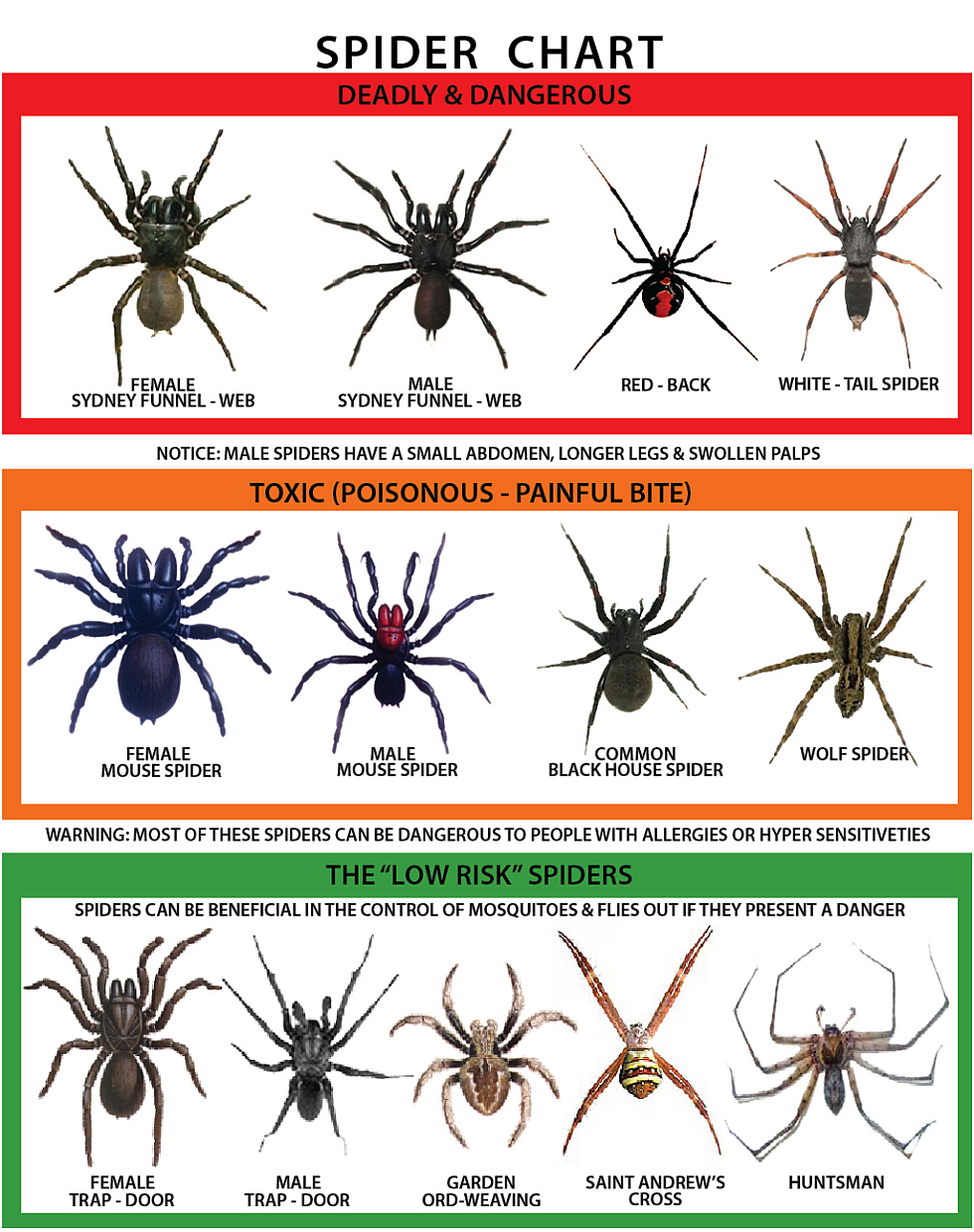
Have a look at the pictures and guess in which of the following category those spiders in Australia belong.

  • Category A: Spider is deadly & dangerous
  • Category B: Spider is toxic. That means venomous. Its bites is very painful.
  • Category C: Spider is a “low risk” spider. Spider can be beneficial in the control of flies & mosquitos…

Just click on the question to get the solution and more information about our (sometimes not so) little friends…and by the way…body size means body size – not total size including legs.

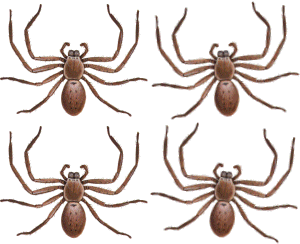
Wolf Spider
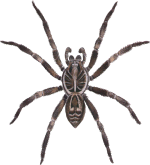
Can this lovely spider with its beautiful pattern really kill you? What do you think? Click here to find out
Category B: This spider’s bite is venomous but not lethal! The bite can be really painful.
Where to find:
Australia-wide, it’s a ground dweller – commonly found around the home, in garden areas Size: 15 mm to 30 mm body length
What to do once you got bitten:
First aid and medical attention (especially for children or elderly)
wolfspider150

Huntsman Spider

What about this big buddy? Lethal or not?
Category C: The bite of a Huntsman spider is not toxic to humans and they are non-aggressive although quite scary when you see them cause they’re huge!
Where to find:
Australia-wide they live under the flaking bark of trees, under flat rocks or within roof spaces. The spider wanders into homes and are found on walls.
Size:
Their body can reach up to 45 mm (that means without legs!).

.

huntsmanani

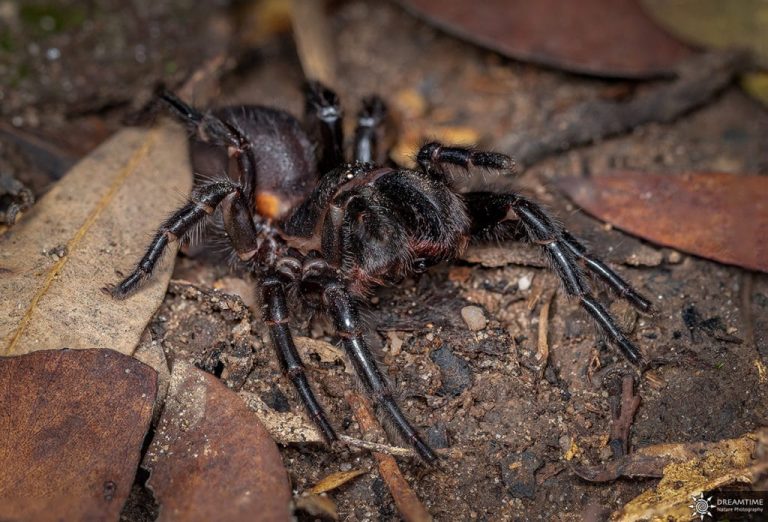
Female & Male Funnel-Web

What about those creepy creatures? Dangerous or not?
Category A: Watch out! This spider can kill you! The Sydney funnel-web spider is arguably the most dangerous spider in Australia, if not the world.
Where to find:
Funnel-web spiders live in eastern Australia. The most dangerous, the Sydney funnel-web, is found around Sydney and eastern New South Wales, with other dangerous species in southern Queensland, Victoria and Tasmania. They prefer moist, cool spots — suburban gardens, under rocks or in rotting logs — and can survive submerged in water for many hours.
Size:
Females are bigger than males. Female can measure up to 7 or 8cm.
What to do once you got bitten:
Go to the next hospital or call an ambulance immediately. They have an anti-venom!
The Blue Mountains Funnel-Web spiders and the Northern Tree Funnel-Web spiders are also high venomous.
funnelwebfemale128
funnelwebmaleani

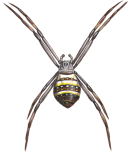
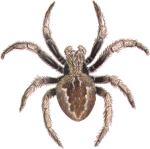
Saint Andrew’s Cross

What do you think about this elegant spider? Is it lethal?
Category C: This spider can’t harm you cause it belongs to the low risk spiders and is non-aggressive.
Where to find:
Australia-wide, found in summer in gardens around the house
Size:
5-15 mm in body length
standrewsspider128

White-Tail Spider (Lampona cylindrata)
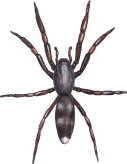
What about this one? Can you guess whether it’s dangerous or not?
Category C (low risk): Despite its scary reputation, the white-tailed spider is not dangerous. Its bite may cause local pain, redness or itching, but large medical studies have found no proven link to skin necrosis (the “flesh-eating” myth). Wash the bite, apply a cold pack, and see a doctor only if it doesn’t settle.
Where to find:
Australia-wide, prefers cool moist places like in garden mulch areas. In summer they wander into buildings to escape the heat!
Size:
Adults between 12 and 20 mm in body length!
What to do once you got bitten:
First aid and medical attention
whitetailspider127

.

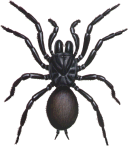
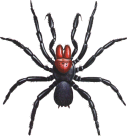
Female & Male Mouse Spider (Missulena spp.)
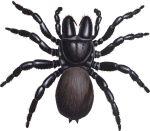
Those spiders look so dangerous...but are they?
Category B: Those creepy spiders can cause severe illness especially to young children. The male spider’s bite can be really painful.
Where to find:
Mouse spiders have a broad distribution across Australia. They are ground dwellers with burrows of more than 1 metre deep. Mouse spiders live in burrows, often near water bodies, and can be found across most of Australia. The male spider wanders around during the day.
Size:
Up to 35 mm in body length. They are often mistaken for funnel-web spiders but are distinguishable by their shorter, stockier legs and the presence of a distinct red or orange patch on the male’s head.
What to do once you got bitten:
First aid and medical attention
mousespiderfemale150
malemousespider127

Garden Orb-Weaving

This thing looks kind of like a crab. Harmless or not?
Category C: This spider is harmless. It’s non-aggressive and its bite is non toxic to humans.
Where to find:
Australia-wide, more common in bush land along the eastern coastal areas, often found in summer in the garden around home.
Size:
20-30 mm
gardenorbweaving150

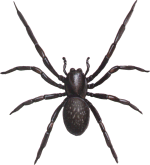
Black House Spider

Looks really creepy! But can it really kill you?
Category B: This spider’s bite is venomous but not lethal! The bite itself can be really painful.
Where to find:
Australia-wide, commonly found in window framing, under eaves, in brickwork, toilets and among rocks and bark.
Size:
Adults are about 15mm in length.
What to do once you got bitten:
First aid and medical attention.
blackhousespider150

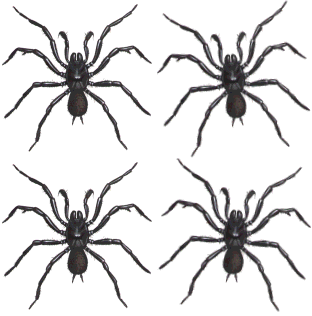
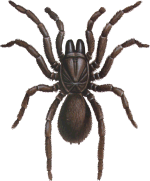
Female Trap-Door

Looks like it has 10 legs!? Argh…but really dangerous?
Category C: This spider looks more dangerous than it is. It’s non-aggressive and its bite is non toxic to humans.
Where to find:
Australia-wide, it’s a ground dweller. Commonly found in drier open ground areas around the home
Size:
Adult is about 35 mm in body length

..

trapdoorfemale150

Red-Back Spider (Latrodectus hasselti)
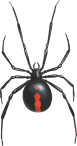
Its back looks almost like a tiny red heart. Does this spider really loves you?
Category A: This spider can be deadly! Its poison is highly venomous! The bite is very painful and a small amount of venom can cause serious illness (attacks the nervous system. By the way…they do not always have a red marking. An anti-venom exists since 1956. The males are much smaller and even though they possess venom, they are considered harmless.
Where to find:
Redback spiders are found throughout Australia, often in human-inhabited areas, including sheds, toilets, and underneath outdoor furniture.
Size:
Varies, males can be tiny, female’s abdomen can grow to the size of a large pea.
What to do once you got bitten:
Go to the next hospital or call an ambulance immediately. They have an anti-venom!
redbackspider77

Spiders Chart – overview

spider-chart980
alluneedpestcontrol.com.au/spiderchart/

First aid for spider bites

Not all spider bites are treated the same way, it depends on the spider.

🕷️ Funnel-web or mouse spider bite (large dark spiders): medical emergency

  1. Call Triple Zero (000) immediately.
  2. Keep the person calm and completely still, movement spreads the venom.
  3. Apply the Pressure Immobilisation Technique: firmly bandage over the bite, then bandage the whole limb (like a snake bite) and splint it so it can’t move.
  4. Do not wash the bite. Stay with the person until help arrives. An effective antivenom exists.

🔴 Redback spider bite: do NOT use a pressure bandage

  • Redback venom acts slowly and locally, so a tight bandage only makes the pain worse.
  • Apply a cold pack and take mild pain relief.
  • Seek medical advice, go to hospital if the pain is severe or spreading, or for children, the elderly, or anyone feeling unwell. Antivenom is available but used less often today.

🕸️ Any other spider bite

  • Wash with soap and water and apply a cold pack for pain.
  • See a doctor if symptoms worsen (spreading pain, nausea, sweating) or if you’re unsure.

⚠️ Golden rule: the full-limb pressure bandage is only for funnel-web and mouse spider bites, never for a redback or an unknown small-spider bite.

Unusual Facts & Trivia

  • The Sydney funnel-web’s venom – an untreated bite can be life-threatening to a human within hours.
  • Male funnel-webs are more venomous than females and wander city streets during mating season (late Nov–Dec).
  • Trapdoor spiders can live for over 20 years in the same burrow.

Source & Pictures: spiders.com.au

⚠️ Disclaimer: This information is a general guide for travellers and is not medical advice. First-aid recommendations can change — always follow the instructions of emergency services. If you’re bitten and unwell, or bitten by a funnel-web or redback, call Triple Zero (000) immediately or go to the nearest hospital. For non-urgent advice you can call healthdirect on 1800 022 222 (24/7), or the Poisons Information Centre on 13 11 26.

5/5 - (16 votes)
Australia Backpackers Guide
The ultimate guide to work and travel around Australia with a Working Holiday Visa! Get all the tips and advice from other backpackers. The first travel guide written by Backpackers for Backpackers in Australia!!!