















Embarking on a Working Holiday Visa (WHV) in Australia is an exciting opportunity to explore a beautiful country while earning money to support your travels. To make the most of your WHV experience, it’s essential to set yourself up for work effectively. So what will you need before starting work in Australia? To begin with: a strong resume/CV, an Australian bank account, a Tax File Number (TFN) and an Australian phone number. This guide provides a step-by-step approach to getting started with work in Australia, ensuring you have a smooth transition and a successful adventure.
Table of Contents
Understand Your Working Holiday Visa
Before you start job hunting, know what your visa actually allows:
- Age. Most nationalities can apply between 18 and 30, up to the day before your 31st birthday. A few countries have a higher limit of 35 — including the UK, Canada, France, Ireland, Italy and Denmark. Check your own country’s rules on the Home Affairs site, because they differ.
- Duration. Twelve months, extendable to a second and third year if you complete the required regional work. UK passport holders are exempt: since 1 July 2024 they can obtain their 2nd and 3rd visa without any specified work at all.
- Specified work. Farm work, construction, mining and fishing count towards a second or third year in designated regional areas. Tourism and hospitality also count, but only in northern, remote and very remote Australia — a café job in Melbourne doesn’t qualify.
The six-month rule, and its exceptions
Condition 8547 on your visa says you can’t work for the same employer for more than six months. Since 1 January 2024 there are broad exceptions, and you no longer need to ask permission if your work falls into any of these:
- different locations for the same employer, as long as no single location exceeds six months
- plant and animal cultivation — anywhere in Australia
- natural disaster recovery work — anywhere in Australia
- critical sectors including agriculture, food processing, health, aged and disability care, childcare, tourism and hospitality — anywhere in Australia
- fishing and pearling, tree farming and felling, construction and mining — in northern Australia only
This matters most for a third year. The 179 days you need are roughly nine months — well past the six-month cap. The cultivation exemption covers most farm work, so it’s rarely a problem in practice, but check before you commit to a long season with one employer. And note the clock resets with each new visa: your six months start again when your second WHV is granted.
Prepare your resume and cover letter
Depending on the types of jobs you want to do Down Under, your CV will vary. But whether you’re looking for a temporary or long-term job, having a well-written CV that meets Australian criteria is essential.
Australian resumes differ from what you’re used to. They’re usually two to three pages — longer than the single-page European standard, but not the five-page document some guides claim. For a backpacker applying to hospitality, retail or farm work, one to two pages is plenty: a hiring manager in a busy café will scan it for thirty seconds. Save the detail for professional roles. Whatever the length, make sure your RSA or White Card is visible near the top.
In Australia it is illegal to ask potential employees for information such as their age, marital status or religion, so do not include these details in your CV. As soon as you have an Australian address and phone number, you should update your CV to make it clear you’re already in the country and ready for work. You should also include at least 2-3 references and their phone numbers. In Australia, employers do tend to actually call your references so it’s essential that you choose people who speak good English and will speak positively about you. You want it to be easy as possible for your potential future boss to contact your references, which can be tricky if they are overseas. The more local references you can include, the better, even if it’s from volunteer work.
For a complete guide to writing your resume in Australia and an easy-to-follow downloadable template, see our article: Writing a resume in Australia – Guide & Templates.
Set up your Bank Account
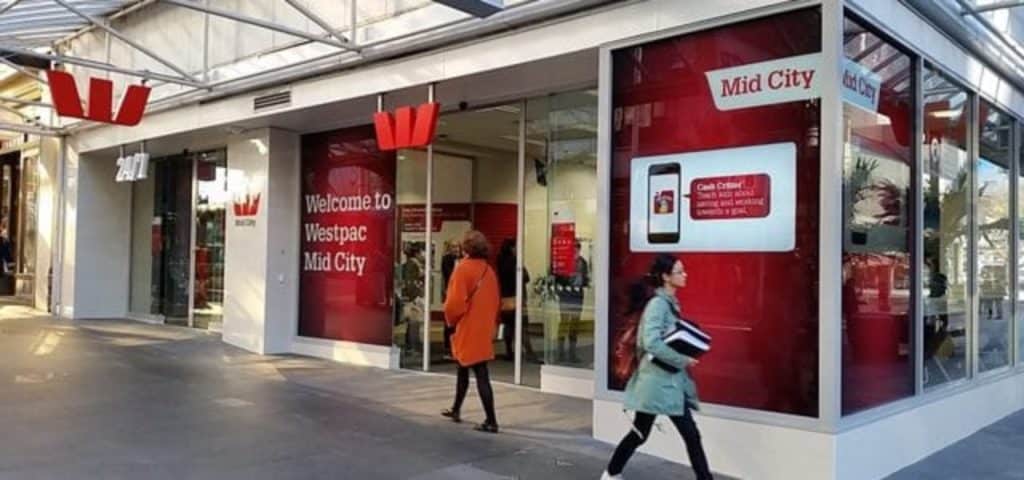
In order to work legally in Australia, you will need to set up a bank account. With some banks, can set up your account online from your home country. You will need to bring your passport as ID, and an address where your bank can post your new debit card. If you don’t have a permanent address yet, you may be able to give the bank the address of your hostel (but make sure you ask the staff first).
Australia has four main banks: Commonwealth, Westpac, NAB and ANZ, plus international options like HSBC and ING. Pick one of the big four: you’ll find their ATMs everywhere, and using another bank’s machine costs you a fee each time, which adds up fast over a year.
Your superannuation
Superannuation is Australia’s retirement savings system. Your employer pays it on top of your wage, it isn’t deducted from your pay. The rate is 12% of your ordinary earnings.
Since 1 July 2026, Payday Super applies: employers must pay super at the same time as your wages, within seven business days, instead of quarterly. This is a significant improvement for backpackers, under the old system plenty of people left the country before a single contribution had been made.
You probably don’t need to open an account. Since 2021, stapled super means your existing fund follows you from job to job automatically — your new employer requests the details straight from the ATO. Before this, backpackers routinely ended up with four accounts and four sets of fees eating their balance. Give each new employer your existing fund details rather than opening a new one.
You can only claim your super when you leave Australia, through the DASP (Departing Australia Superannuation Payment). Be aware of the tax: for WHV holders it’s withheld at 65%, so you get roughly a third back. Other temporary visa holders pay 35%.
Read also : How to Claim your Superannuation
Apply for your Tax File Number (TFN)
Your TFN is the single most important piece of admin you’ll do. Without one, your employer must withhold tax at the highest rate — you’ll still get the money back eventually, but you’ll spend months on a much smaller pay packet. Apply the week you land.
Two ways to apply
Online through myGovID and the ATO is now the fastest route. You verify your identity digitally using your passport, and if everything matches you can receive your TFN in a few days rather than waiting for the post. You’ll need an Australian address for the application, but a hostel address is fine.
The standard online form on the ATO website still works and posts your TFN to the address you give. Allow up to 28 days.
Once you have it, give it to each new employer within 28 days of starting. Keep it somewhere you won’t lose it, a photo on your phone plus a copy in your email works. And never share it with anyone other than your employer, your bank and the ATO: TFN scams targeting backpackers are common, and no legitimate organisation will ask for it by text or social media.
🧾 Working Holiday Maker tax rates
• First AUD 45,000 of income: 15%
• AUD 45,001–135,000: AUD 6,750 plus 30% of the amount over 45,000
Check your employer is registered as a WHM employer. If they aren’t, they must withhold at the much higher foreign resident rate — which means a noticeably smaller pay packet for the same work. You can verify an employer’s registration on the ATO website before you start.
Apply for an Australian Business Number (ABN)
An ABN is for people running a business, sole traders and freelancers. You need a TFN before you can apply for one, and you can check whether you’re actually entitled on the Australian Business Register.
Be careful if an employer asks you to get one. Some businesses push new staff towards an ABN because it’s cheaper for them: no super, no leave, no payroll tax, no minimum wage obligation. If you’re working set hours, under someone’s direction, using their equipment, you’re an employee, not a contractor, whatever the paperwork says. Misclassifying workers this way is illegal, and the Fair Work Ombudsman takes it seriously.
There’s a second catch that matters for your visa: ABN work can be harder to prove for your 88 days, because you’re invoicing rather than receiving payslips. If you’re chasing a second year, working under a TFN is much simpler.
Working under a TFN also means your tax is deducted as you go, so you’re not setting money aside for a bill at the end of the financial year. Read more: How to get an ABN
Get an Australian Phone Number
When living in Australia on a Working Holiday Visa you will need an Australian phone number. You are more likely to get calls from potential employers if you have an Australian number, and using your old number will leave you with huge roaming charges, so it’s important to get this sorted as quickly as possible.
The three biggest network providers in Australia are Telstra, Vodafone and Optus. They all provide 4/5G services. When choosing your provider, consider the coverage provided and the costs.
Coverage
When choosing your network provider, bear in mind where you will be going in Australia. Some providers have better coverage then others in remote areas. Telstra is considered to have the best coverage nationwide, as well as in the outback. However, there are many places were you will not have any signal, regardless of your provider. If you’re sticking to urban areas, your provider isn’t that important.
Costs
Aldi also provides pre-paid deals at a lower price that use the Telstra network as a Mobile Virtual Network Operator (MVNOs). MVNOs are smaller providers that offer access to the Telstra, Optus or Vodafone network. They often have good deals.
Where to buy a SIM Card
You can buy a SIM card practically anywhere, from supermarkets (Woolworths, Coles, 7Eleven, etc) or phone stores. Major providers such as Telstra and Vodafone have stores in all major cities.
Read more : Phone plans in Australia
Know your minimum pay 2026
• National minimum wage: AUD 26.44 per hour, or AUD 1,004.90 a week for 38 hours
• As a casual, how most backpacker jobs are structured, you get at least 25% loading on top: AUD 33.05 per hour
• Many industries have higher Award rates, plus penalty rates for evenings, weekends and public holidays
These figures are the legal floor, not a starting point for negotiation. Check your specific industry rate in the Fair Work pay guides, rates are updated every 1 July.
Get your certificates
Some jobs such as hospitality and construction may require specific certificates or training. These certificates prove your knowledge /abilities in certain areas and having them show that you are ready to start working straight away.
RSA certificate
The RSA (Responsible Service of Alcohol) is essential for working in hospitality. It shows that you are aware of the regulations regarding alcohol consumption in Australia. You are trained to learn to be responsible when serving alcohol to patrons in order to prevent harm caused by excessive alcohol consumption, as well as avoiding expensive fines for breaking the law (serving alcohol to minors etc).
🍹 Get your RSA in Australia (with special discounts!)
Pay less for your RSA course (Responsible Service of Alcohol). With this certificate, you are allowed to work in all places where alcohol is served or sold.
White Card
The White Card is compulsory to work in the construction industry or in mines. The aim of the training is to learn about safety at work. The course trains workers to identify hazards and to prevent and manage accidents at work.
👷 Get your White Card in Australia (with discounts)
Take advantage of special offers to obtain the white card and work in the construction industry.
Read also : Training and Certificates in Australia
🏥 One more thing before your first shift
Australia has no reciprocal healthcare agreement with most Working Holiday countries, so you have no access to Medicare — every consultation and every hospital night is billed to you in full. And plenty of standard travel policies exclude manual work, which rules out exactly the jobs on this page: farm work, construction, hospitality.
Start your job search
Online Job Portals
Websites like Seek, Indeed, and Jora are popular for finding job listings. For hospitality and casual work, check out Gumtree and Backpacker Job Board. Also check LinkedIn for companies that interest you.
Recruitment agencies
Register with agencies like Hays, Adecco, and Randstad, which can help match you with suitable job opportunities. These agencies are usually specialised in a sector / industry.
Networking
Join local Facebook groups or WhatsApp groups and attend events or meetups for WHV travelers. Networking can lead to job opportunities and valuable advice from fellow backpackers.
Walk-in applications
For jobs in hospitality, retail, and farming, consider walking into establishments with your resume and asking if they have any openings.
Types of jobs commonly available to WHV holders
- Hospitality and Tourism: Jobs in cafes, restaurants, bars, and hotels are plentiful, especially in tourist areas and major cities.
- Retail: Retail positions in stores and shopping centers can be a good option, particularly during busy seasons.
- Farm Work: Regional farm work is also a good option for WHV holders, especially those seeking a visa extension. Tasks can include fruit picking, packing, and general farm maintenance.
- Construction & Mining: If you have relevant skills or are willing to obtain a White Card (construction induction training), construction jobs can be lucrative.
- Office and Temp Work: Temporary administrative or office jobs can provide steady income, often found through recruitment agencies.
🪪 Most of these jobs need you to drive
Farm work, roadhouses, regional hospitality — almost none of it is reachable without a car, and employers ask. If your licence isn’t in English you need an International Driving Permit or an official NAATI-certified translation alongside it. We do the translation, online, in under 48 hours.