














Australia is renowned for its diverse and unique wildlife, which includes some of the most fascinating yet feared creatures on the planet – spiders. Spiders in Australia are the cause of many phobias, a multitude of beliefs and indeed responsible for fatal envenomations in the past. Although fatal spider bites in Australia are now extremely rare, several species carry potent venoms that can cause serious illness. Awareness of their habitats, seasons of peak activity and first-aid measures will keep you—and your backpacker mates—safe.
Table of Contents
The danger of spiders in Australia
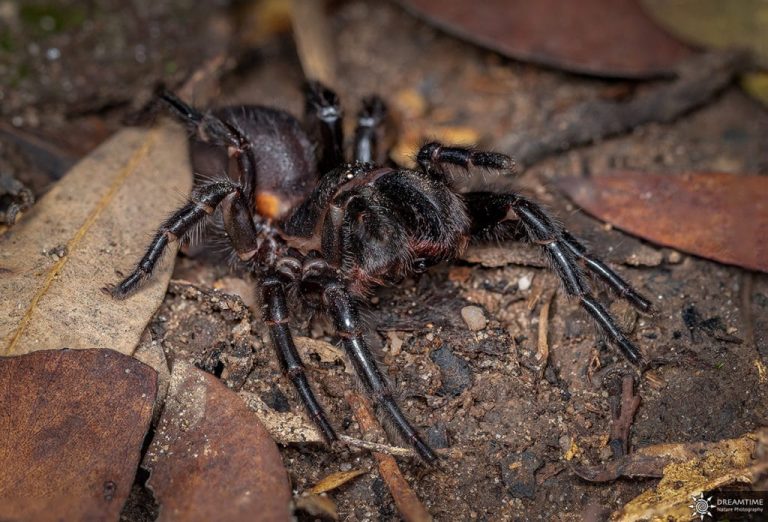
The two most dangerous groups are those commonly known as Funnel web spiders (which include 3 genera of spiders) and Redback spiders. Then come the Mouse spiders which can also cause serious envenomation, even if none has ever been lethal!
You should know that many bites are called blank bite, that is to say without injection of venom. While the thought of encountering Australia’s dangerous spiders may be unsettling, it’s important to remember that bites are rare and fatalities even rarer, thanks to effective first aid and medical treatments. By understanding these spiders and taking appropriate precautions, people can safely coexist with these remarkable creatures that play an essential role in Australia’s ecosystems.
💸 10% discount on your insurance policy
Find here all the information you need and get your 10% Go walkabout promo code for any policy.
Which spiders are dangerous in Australia?
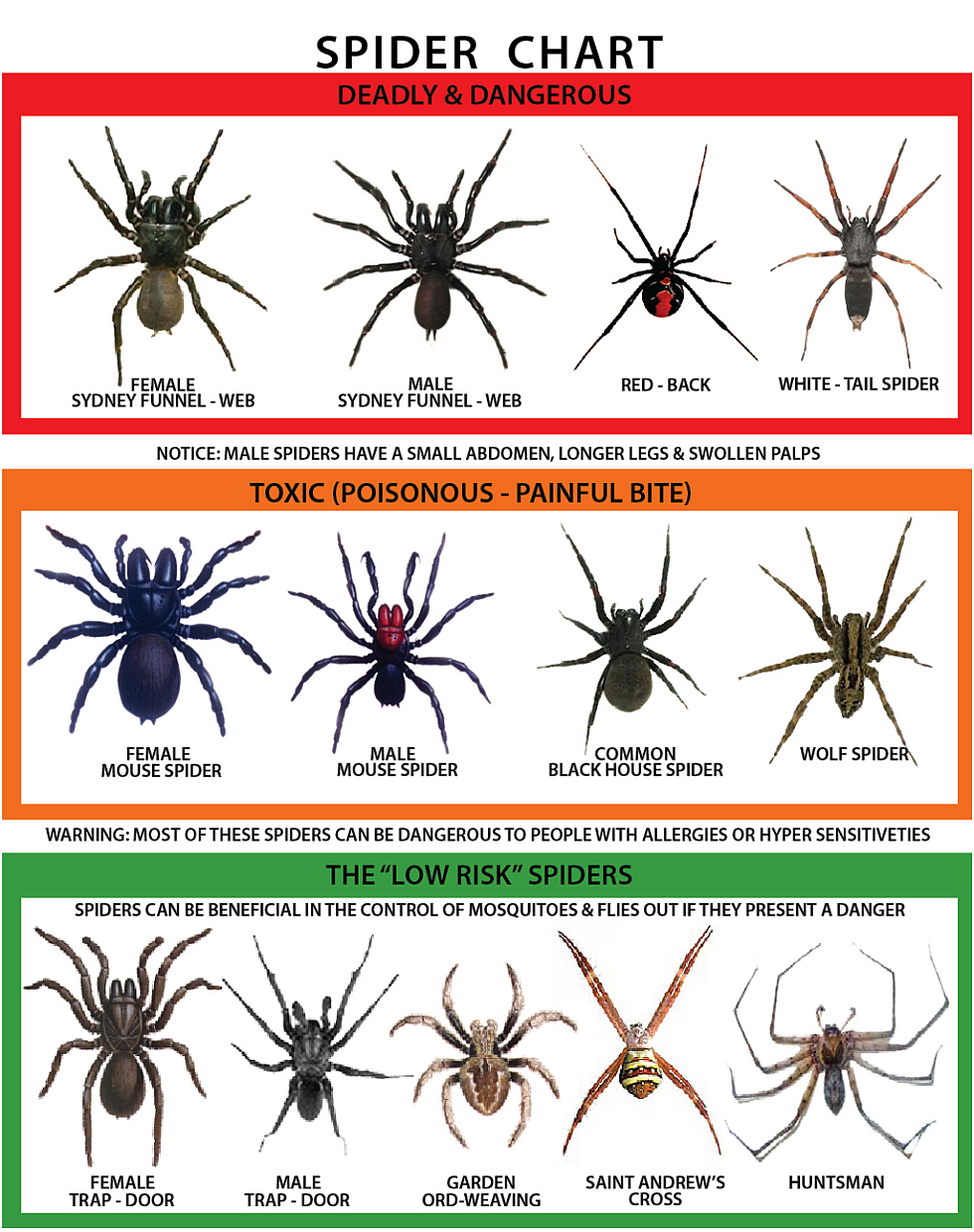
Have a look at the pictures and guess in which of the following category those spiders in Australia belong.
- Category A: Spider is deadly & dangerous
- Category B: Spider is toxic. That means venomous. Its bites is very painful.
- Category C: Spider is a “low risk” spider. Spider can be beneficial in the control of flies & mosquitos…
Just click on the question to get the solution and more information about our (sometimes not so) little friends…and by the way…body size means body size – not total size including legs.
Wolf Spider
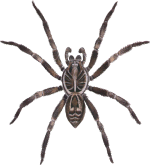
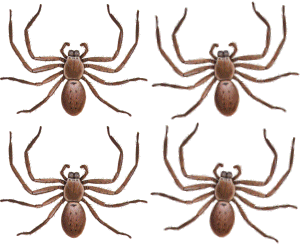
Huntsman Spider
.
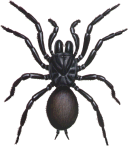
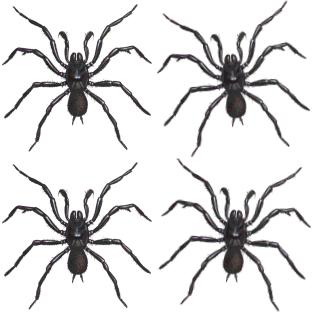
Female & Male Funnel-Web
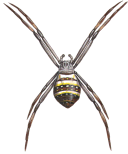
Saint Andrew’s Cross
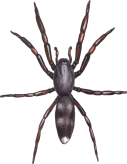
White-Tail Spider (Lampona cylindrata)
.
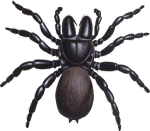
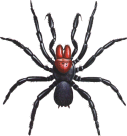
Female & Male Mouse Spider (Missulena spp.)
Garden Orb-Weaving
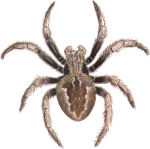
Black House Spider
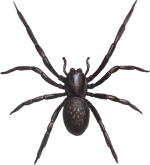
Female Trap-Door
..
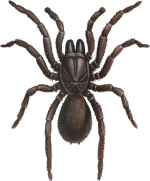
Red-Back Spider (Latrodectus hasselti)
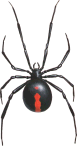
Spiders Chart – overview
First aid for spider bites
Not all spider bites are treated the same way, it depends on the spider.
🕷️ Funnel-web or mouse spider bite (large dark spiders): medical emergency
- Call Triple Zero (000) immediately.
- Keep the person calm and completely still, movement spreads the venom.
- Apply the Pressure Immobilisation Technique: firmly bandage over the bite, then bandage the whole limb (like a snake bite) and splint it so it can’t move.
- Do not wash the bite. Stay with the person until help arrives. An effective antivenom exists.
🔴 Redback spider bite: do NOT use a pressure bandage
- Redback venom acts slowly and locally, so a tight bandage only makes the pain worse.
- Apply a cold pack and take mild pain relief.
- Seek medical advice, go to hospital if the pain is severe or spreading, or for children, the elderly, or anyone feeling unwell. Antivenom is available but used less often today.
🕸️ Any other spider bite
- Wash with soap and water and apply a cold pack for pain.
- See a doctor if symptoms worsen (spreading pain, nausea, sweating) or if you’re unsure.
⚠️ Golden rule: the full-limb pressure bandage is only for funnel-web and mouse spider bites, never for a redback or an unknown small-spider bite.
Unusual Facts & Trivia
- The Sydney funnel-web’s venom – an untreated bite can be life-threatening to a human within hours.
- Male funnel-webs are more venomous than females and wander city streets during mating season (late Nov–Dec).
- Trapdoor spiders can live for over 20 years in the same burrow.
Source & Pictures: spiders.com.au
⚠️ Disclaimer: This information is a general guide for travellers and is not medical advice. First-aid recommendations can change — always follow the instructions of emergency services. If you’re bitten and unwell, or bitten by a funnel-web or redback, call Triple Zero (000) immediately or go to the nearest hospital. For non-urgent advice you can call healthdirect on 1800 022 222 (24/7), or the Poisons Information Centre on 13 11 26.