














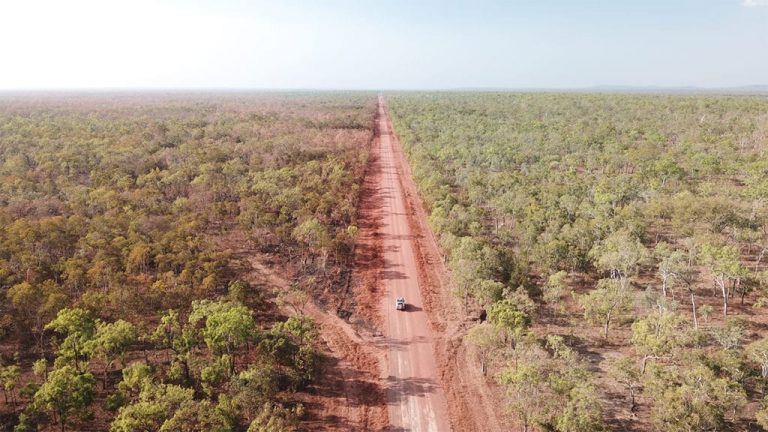
Ready for your road trip around Australia? Driving its endless roads and crossing its incredible landscapes will be one of the best experiences of your trip. But a bit of preparation goes a long way, from your licence and the best season to travel, to fuel, tolls and keeping your vehicle in shape. Here’s everything you need to plan a smooth road trip.
(This guide covers the practical side of planning your drive. For staying safe on the road – wildlife, fatigue, road trains, hazards and fines -see our driving safety guide.)
Table of Contents
What you need to know for driving in Australia
Driving on the Left
In Australia, driving is on the left side. The steering wheel is on the right side of the car, and the gear shift is on the left. Driving on the left also means overtaking on the left and navigating roundabouts to the left, while still giving way to the right. If you come from a country where driving is on the left, no problem. For others, rest assured, it’s a mental adjustment that you will quickly get used to!
Speed Limits
Speed limits vary by state and territory in Australia. The signage is very clearly marked on the roads.
- In urban areas: 50 km/h is often the maximum speed allowed in cities.
- Near schools: The speed limit drops to between 25 km/h and 40 km/h during school entry and exit times.
- On highways: The maximum speed limit is generally 110 km/h. The only exception is the Northern Territory, where some sections of the Stuart, Barkly, Victoria and Arnhem Highways are signed at 130 km/h, the highest limit in Australia. Always follow the posted signs.
Radar controls are quite frequent. Exceeding speed limits results in a hefty fine and demerit points on your license.
Road Signage
The majority of road signs are similar to those seen in Europe:
- Yellow signs: they indicate a temporary change (construction, etc.)
- Green signs: they indicate major routes (expressways, highways, etc.)
- Brown signs: they indicate tourist routes and often include the letter T
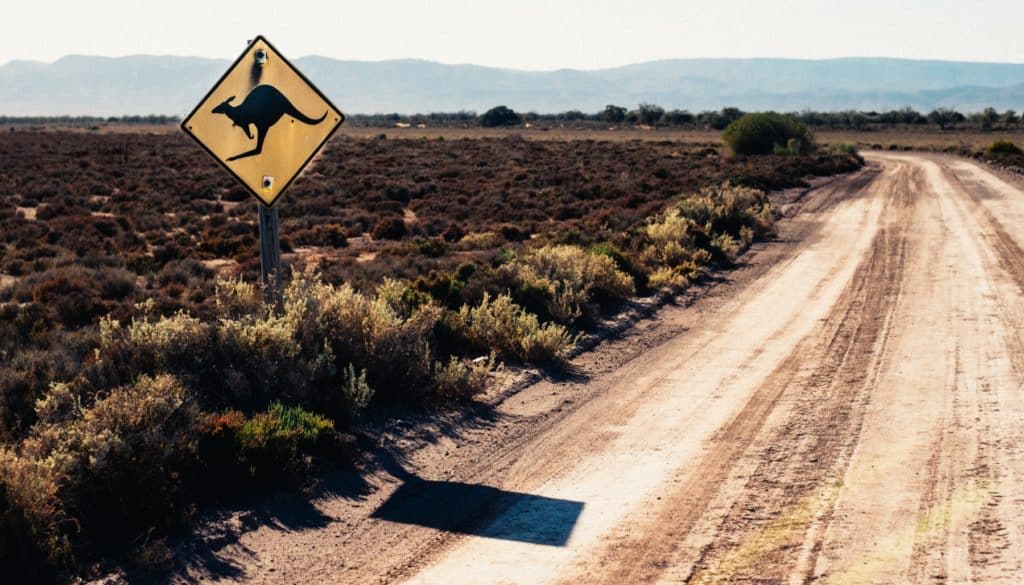
- Yellow, orange, or red signs: they indicate a hazard (animals, flood risk, speed bumps, etc.)
Licence & NAATI translation
A valid driving licence is mandatory. Your home-country licence is valid in Australia as long as it’s in English. If it isn’t, you have two options: carry an International Driving Permit (IDP), or have your licence translated by a NAATI-accredited translator. Note that some states (notably Queensland) may require an official translation rather than an IDP — so a NAATI translation is the safest option to stay compliant everywhere.
🪪 Official NAATI Translation of Your National Driver’s Licence
Getting an accredited translation is the fastest and most reliable way to drive legally in every Australian state. Our NAATI‑certified translators will translate your German, Italian, Spanish, Czech, Russian licence within 24 to 48 hours!
Plan around the seasons
| Region | Best months | Why | Good to know |
|---|---|---|---|
| Tropical North | May – Oct (dry season) | Mild temperatures, low rainfall, roads open | Avoid the wet season (Nov–Apr): heat, storms and flooded roads. Always check BOM forecasts and road closures before you set off. |
| Red Centre | Mar – May & Aug – Sep | Cooler days and nights for hiking (Uluru, Kings Canyon) | Summer (Dec–Feb) is extremely hot. Book Uluru tours and experiences well in advance — they sell out. |
| Southern Coast | Oct – Apr | Warm beach weather (Great Ocean Road, coastal drives) | Peak season over the summer holidays (Dec–Jan): fuel, campsites and rentals are pricier — book ahead. |
The road network in Australia
Australia is a huge country. Most of the country’s economic life and housing is concentrated near the coast. 85% of the population lives within 50 km of the sea. This is why the road is the best way to explore all the country’s places and get off the beaten track. Before setting off on your adventure, it is strongly recommended that you prepare your itinerary. It is not always possible to get from point A to point B without making a huge diversions.
For example: it is impossible to get from Alice Springs to Sydney via a direct route.
The roads are all in good to very good condition. However, you should take extra care when travelling through remote areas, especially in the north of the country, which can experience heavy rainfall during the rainy season.
Read also : Road Trip Australia : Itineraries ideas
Highways and tolls
The majority of highways in Australia are free. However, there are some sections that are toll roads, mainly around Sydney, Melbourne and Brisbane. These toll roads do not have physical toll booths that allow you to pay on entering or leaving the highway, as in Europe.
To pay, you have two options: either pay before you enter the road (by buying a pass on the internet or by phone), or pay afterwards (on the internet, which is usually more expensive). You have 2 to 3 days after your passage to pay. After that, you will be fined, in addition to the motorway fees to be paid.
💡 OUR ADVICE: Find out in advance if your journey includes any paying areas. Using the GPS on your smartphone, decide whether to use them or avoid them by adapting your route.
If you are using a motorway that is subject to a charge, make a note of the name of the section of motorway so that you can make your payment correctly online… or risk paying a fine.
Inform yourself about the Tolls Road depending on the cities: Queensland Toll Roads, NSW E-Toll, Roam Sydney, Melbourne Linkt, East Link Melbourne
Sealed vs unsealed roads
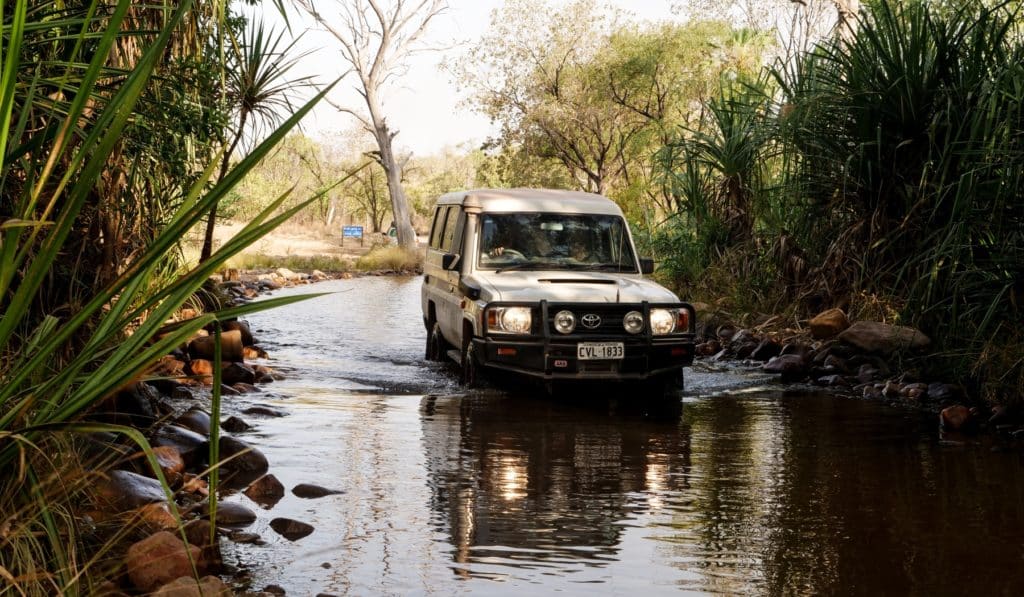
For route planning, it’s important to know that not all Australian roads are sealed. Main roads are bitumen and fine for any vehicle, but unsealed (gravel/dirt) tracks are common in Western Australia, the Northern Territory and the Red Centre, often at the access to national parks, lookouts and campsites.
Some tracks are passable in a conventional car or van; others require a 4WD. Before a long or remote drive, check whether your whole route is sealed, and make sure your vehicle (and your rental agreement) allows the roads you plan to take — many rentals prohibit unsealed roads.
🚐 5% Discount with Travellers Autobarn
Travellers Autobarn is offering a 5% discount to Australia Backpackers Guide readers with promo code GUIDEEN
Fuel & EV tips
In major cities: Gasoline in Australia is cheaper than in France, especially in urban areas. You will have no trouble finding it at affordable prices. There are mobile apps available to easily compare prices, depending on where you are. We recommend FuelMap.
Outside major cities: Gas stations are less common in rural areas. In the Outback, prices can be up to double those in Sydney or Melbourne. We advise equipping your vehicle with a jerry can. Fill it up at the cheaper stations. This is an effective way to save money during your road trip and avoid running out of gas in the middle of the desert. Remember that sometimes, gas stations can be up to 400 km apart. In any case, always make sure to check where the next gas station is on your route before embarking on a long journey. In remote areas, stations are often located in roadhouses, which include all commercial points: restaurant, gas station, motel, camping, etc
Driving an EV? The charging network is growing fast, but there are still long gaps in the outback (hundreds of km between fast chargers on routes like the Stuart Highway). Plan charging stops carefully with PlugShare or Chargefox, and carry a Type 2 cable for slower caravan-park outlets. the road conditions. Fires and flooding can be frequent depending on the season.
💸 10% discount on your insurance policy
Find here all the information you need and get your 10% Go walkabout promo code for any policy.
Vehicle maintenance
Australia’s climate is tough on vehicles (heat, dust, salt), so regular checks prevent nasty surprises on the road.
Under the bonnet:
- Check oil and coolant levels weekly, especially before long drives.
- Keep an eye on your tyre condition and pressure (check monthly, and lower pressure if driving on sand with a 4WD).
Bodywork & interior:
- Wind and rain carry sand and salt that can damage paintwork — rinse the vehicle after coastal or beach driving.
- Keep the interior clean (dust builds up fast on outback roads) to avoid premature wear.
Keeping your vehicle well maintained is especially important if you’ve bought a car or van for your trip and plan to resell it later — a clean, well-kept vehicle holds its value.
Paying a fine in Australia
Traffic fines vary from state to state, and how you pay depends on where you got the fine. If you’re not sure, the easiest way is to search “pay fine [state]” on Google — but here are the official payment pages for each state and territory:
- New South Wales: revenue.nsw.gov.au
- Victoria: fines.vic.gov.au
- Queensland: qld.gov.au
- Western Australia: wa.gov.au
- South Australia: fines.sa.gov.au
- Tasmania: justice.tas.gov.au
- Northern Territory: nt.gov.au
💡 Don’t ignore a fine: unpaid fines attract extra penalties, and rental companies will pass on any toll or speeding fines to your card (often with an admin fee). For the actual rules and fine amounts, see our driving safety guide.
Download the complete Guide for a Road Trip on the East Coast
Our FREE 52-page guide brings together all the info you need for your East Coast Road Trip in Australia:
- Preparations (seasons, budget)
- All the best spots to visit on the coast
- The best tours & activities
- Spots to park and sleep in a campervan