














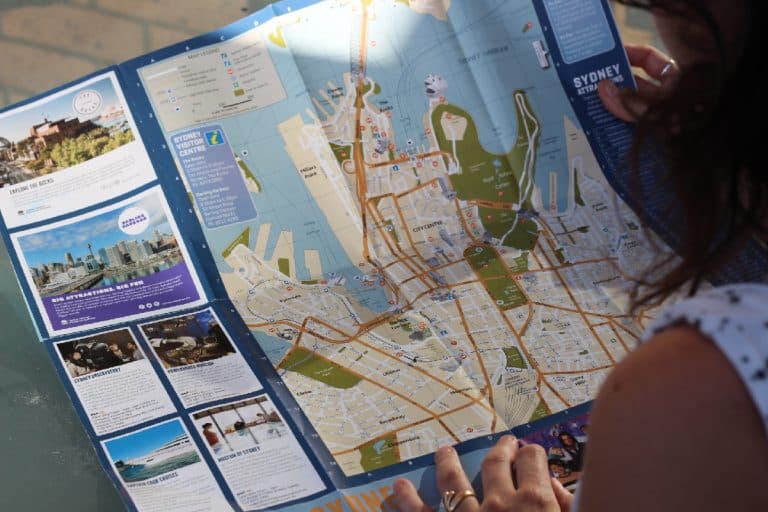
Arriving in Australia on a Working Holiday Visa (WHV) is an exciting adventure filled with new experiences and opportunities. To ensure a smooth transition and make the most of your first week, it’s essential to have a clear plan. But you’re probably wondering about the first steps you’ll have to take after you arrive. In this article, you will find a handy checklist for each day of your first week Down Under. We recommend that you organise accommodation (youth hostel, Wwoofing, HelpX, etc) for at least the first five days of your stay. This will give you some time to explore the city and get a start on any admin you need to do. Here’s a comprehensive to-do list to help you get started.

Airport to City
- Clear SmartGate using your e-passport (automated facial-recognition gates).
- Australia Travel Declaration (ATD): Australia is gradually replacing the paper arrival card with a digital declaration you fill in online up to 72 hours before departure (you then get a QR code). It’s currently only on selected Qantas flights to Sydney, Melbourne and Brisbane (Perth and Adelaide by end of 2026). On all other flights, you still fill in the paper Incoming Passenger Card on board so don’t worry if you don’t have a digital declaration. Check the latest on abf.gov.au.
- Airport transfer:
- Sydney → City: Opal train from AU$20
- Melbourne → CBD: SkyBus from AU$22
- Brisbane → Roma St: Airtrain from AU$18
- If you are traveling with a group, it is sometime cheaper to take a taxi or Uber and split the fare (a taxi from the airport to the centre of Sydney is about $60).
- Some hostels will actually send a shuttle bus to pick you up at the airport, provided you have booked a bed with them for at least a week. Check with your hostel before you land.
- Check into hostel/Airbnb. Ask reception for free Wi‑Fi.
Activate your SIM card
One of the first things you should do upon arrival is to get connected. Purchase an Australian SIM card from a provider like Telstra, Optus, or Vodafone. This will allow you to stay in touch with new friends, potential employers, and access essential services.
An affordable alternative is to buy a ‘prepaid card’. You can buy a SIM card from any operator for about $2 and then top it up on a monthly basis.
Which operator should I choose?
- Optus offers attractive rates on international calls and texts, depending on your plan (40 GB / 28 days / from AU$30). Check current plans.
- Telstra is known to have the best national coverage. Its offers are a little more expensive (45 GB 5G / 28 days / approx. AU$35).
- Vodafone has average national coverage.
- If you plan to stay in a big city without travelling further afield, Felix Mobile is a very inexpensive alternative. For only $35/month, your connection is unlimited. National coverage is however very mediocre outside metropolitan areas.
- Many providers now offer eSIM, which you can activate before you even land.
💡 Tip: Compare plans and choose one that offers good data packages and coverage in the areas you plan to visit.
Read more: Phone plans in Australia
Open a bank account
Opening an Australian bank account is crucial for receiving your salary and managing your finances. Major banks such as Commonwealth Bank, ANZ, NAB, and Westpac offer accounts tailored for international visitors.
Which bank should I choose?
The Big Four banks all have a strong presence across Australia. Withdrawals are free at your own bank’s ATMs (you may be charged around $2–$3 at other ATMs). Here’s a quick comparison for new arrivals:
| Bank & account | Monthly fee | Fee waiver | Good to know |
|---|---|---|---|
| NAB Classic Banking | AU$0 | No conditions — free for everyone | The only Big Four account with no monthly fee at all. Low-cost transfers via the NAB app. |
| Westpac Choice | AU$5 | Under 30, students, or deposit AU$2,000+/month | Migrant-friendly: first 12 months free for new arrivals. Can apply before you land. |
| CommBank Smart Access | AU$4 | Under 30, or deposit AU$2,000+/month | Largest ATM network nationwide — handy on the road. |
| ANZ Access Advantage | AU$5 | Under 25, or deposit AU$2,000+/month | Strong international services and multilingual support. |
💡 Once your salary is paid in each month (AU$2,000+), most fee waivers apply automatically. Fees are indicative (2026) and can change — check the bank’s website. You’ll generally need a TFN to avoid higher withholding tax on any interest earned.
💡 Tip: Some banks allow you to set up an account online before you arrive, making the process quicker once you’re in Australia.
For more information, see our article: Open a Bank account in Australia
Transfer your money
To transfer money from your home country bank account to your Australian one, you have several options.
- You can choose to transfer from your home bank account directly. Costs can be high as both banks (from your home and host country) will charge fees.
- We recommend that you use a company specialising in international bank transfers. CurrencyFair and Wise are among the best known and least expensive.
Create myID
Download myID (formerly myGovID) and verify your identity with your passport. It links your tax, Medicare and government services in one place.

Apply for Your TFN (Tax File Number)
A Tax File Number (TFN) is essential if you plan to work in Australia. You can apply for a TFN online through the Australian Taxation Office (ATO) website.
The form you fill out to get a TFN includes very basic questions such as your first name, surname, postal address (in Australia), passport number, nationality, phone number and so on. When you are finished filling out the form, you will receive a file number, which will act as a temporary TFN and will allow you to work until you receive your actual TFN. It usually takes about 10-28 days to receive your TFN by mail.
If you have any issues, you can always call 13 28 61 and give your ATO receipt ID. If you changed your address before receiving your TFN in the post, you will be able to get your TFN over the phone.
💡 Tip: Use your temporary address if you haven’t secured a permanent one yet. You can update it later with the ATO.
Heads‑up: Never pay third‑party sites for a “fast TFN”. The ATO service is free.
Open a Superannuation Account
You can create your Superannuation account after you get your TFN. This is a retirement account that is frozen for the duration of your stay in Australia, so you won’t be able to withdraw money from it until you leave for good. If you are over 18, your employer is legally obliged to pay you the equivalent of 12% of your salary (the Super Guarantee rate since 1 July 2025) into your Superannuation account. When you start a job, remember to pass your account details on to your employer.
Read more: How to claim your Superannuation

Medicare enrolment (If Applicable)
If you’re from a country that has a reciprocal healthcare agreement with Australia (reciprocal countries only: UK, Sweden, Belgium, Netherlands, Italy, etc.). Visit a Services Australia office with passport plus visa grant letter. Get a temporary card number the same day; physical card mailed in 2 weeks.
💡 Tip: Check the list of eligible countries and ensure you have travel insurance if you’re not covered by Medicare.
Job‑Ready Certificates
Depending on the type of job you want to do, you may need certain courses/certificates under your belt, so don’t wait too long to inquire and register.
Some examples:
• For those who want to work in an establishment that serves alcohol, you will need to pass the RSA.
• If you want to work in a café, you can also take a Barista course.
• If you plan to work in construction or in the mines, you’ll need to get the White Card.
• For those who wish to work in a casino type gaming establishment, you will have to get the RSG/RCG.
• Anyone who plans to operate forklifts will need to pass the Forklift License.
🍹 Get your RSA in Australia (with special discounts!)
Pay less for your RSA course (Responsible Service of Alcohol). With this certificate, you are allowed to work in all places where alcohol is served or sold.

Arrange Accommodation
If you decide to spend a few months in your city of arrival, we recommend you start looking for a flat share as soon as possible. Spend about a week in a hostel so you can get your admin done and figure out what neighbourhoods you would like to live in. Sharing a flat or house will cost you less than staying in a hostel, and will be more comfortable and private. There are many sites where you can find ads (Gumtree, Flatmates etc).
🛏️ Book your first nights in advance
Arriving jet-lagged with nowhere to sleep is stressful. Book a hostel or budget hotel for your first 5 to 7 nights before you land — it gives you a stress-free base to sort out your admin and explore different neighbourhoods before committing to a share house.
Find accommodation on Booking.com
Start Job Hunting
Begin your job search by updating your resume and cover letter to fit Australian standards (they’re shorter and less personal than in many other countries). Then focus your search where backpackers actually get hired:
- Seek and Indeed are the two biggest job boards, covering every industry. Set up job-alert emails so new listings land in your inbox automatically.
- The Backpacker Job Board is the go-to site for classic WHV work: farms, hospitality and labouring. Ads are free to browse and employers often reply fast via WhatsApp.
- Gumtree and local Facebook groups (search “[your city] backpacker jobs” or “[your city] hospitality jobs”) are full of casual gigs, hostel work and last-minute shifts. Great for finding something quickly, just stay alert to scams: never pay a fee to get a job, and meet employers in person before committing.
- Walking in with a printed resume still works surprisingly well in hospitality and retail, especially in cafés, bars and shops. Don’t underestimate handing your CV over in person.
- Signing up with local recruitment agencies can help for office, admin or skilled roles.
💡 Tip: Your best source of leads is often other travellers. Ask around at your hostel, join local backpacker Facebook groups, and let people know you’re looking, a lot of jobs are filled by word of mouth before they’re ever advertised.
To help you put your CV together, see our article: Writing a Resume in Australia: Guide and Template
Transport Cards & Apps
Familiarize yourself with the public transport system in your city.
- Opal Digital Card (NSW) now live in Google Wallet & Apple Pay – no plastic needed.
- Myki Mobile on iPhone (since Sept 2024). Buy a 7‑day Myki Pass if commuting daily.
- Queensland (go card): works across Brisbane, Gold Coast and Cairns — and Queensland has a permanent 50-cent flat fare on public transport, one of the best deals in Australia.
- Victoria has half-price public transport until 1 January 2027.
💡 Tip: Download transport apps like Citymapper or the local transport app for real-time updates and route planning