














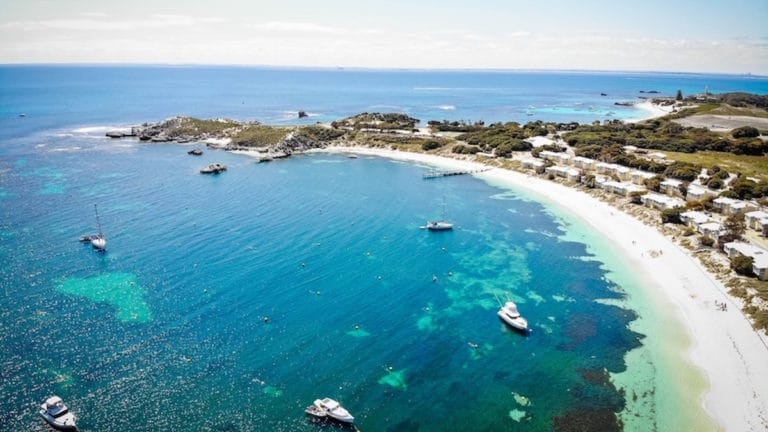
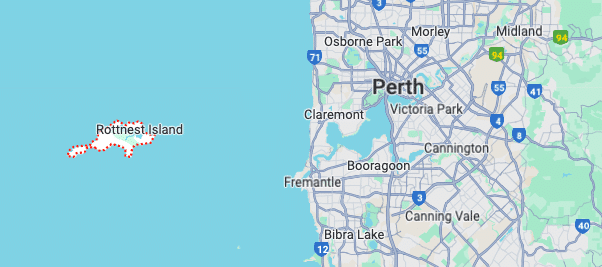
Wadjemup — better known as Rottnest Island — sits 19 km off the Western Australian coast and blends reef‑rimmed bays, pink salt lakes and the world’s chillest marsupial, the quokka. We recommend you give yourself at least a full day for your visit, or you can opt for two days to really take your time and get away from it all for a while. Only accessible by ferry, cars are not allowed on the island so you will have to explore by foot, by bike or by bus.
Table of Contents
Where is Rottnest Island located?
The island has been known as Wadjemup to the Whadjuk Noongar people for thousands of years — the name means “place across the water”. In 1696 the Dutch navigator Willem de Vlamingh charted it and called it “Rattennest”, mistaking the quokkas for giant rats.
Knowing this doesn’t spoil the day — it just changes how you read the place. The Wadjemup Museum in Thomson Bay tells the story properly, and it’s worth twenty minutes of your visit.
The island was later used as a military station during both world wars. Today it’s one of Western Australia’s most popular destinations, drawing visitors for its beaches, snorkelling, cycling and wildlife.
How to get to Rottnest Island ?
To reach the island you’ll need a ferry. Three operators run the crossing: Rottnest Express and Rottnest Fast Ferries, plus SeaLink. The crossing takes about 30 minutes from Fremantle, 45 from Hillarys, and up to 90 minutes from Barrack Street Jetty in central Perth.
Budget AU$80–95 for a same-day return, depending on your departure point — Fremantle is the cheapest and quickest. Fares drop midweek, and Tuesday specials around AU$40 return turn up regularly. The Rottnest Island Admission Fee is included in your ferry ticket, so you won’t pay twice.
You can bring your own bike for a small fee. Otherwise Pedal & Flipper is the only rental outfit on the island, so prices are what they are: from around AU$36 a day for an adult bike, less for children, and snorkel sets from about AU$22. Booking a ferry + bike package online usually works out cheaper than paying for both separately.
Best season to visit Rottnest Island
The best time to visit Rottnest Island is during the Australian summer months, from December to February, when the weather is warm and sunny with average high temperatures around 30°C (86°F). This is also the most popular time to visit the island, so expect larger crowds and higher rates for accommodations and activities.
If you prefer milder temperatures and fewer people, you might consider visiting Rottnest Island in the fall or spring, from March to May or from September to November. Temperatures are generally cooler (around 25°C or 77°F), but there are fewer visitors and rates are often lower.
The Australian winter, from June to August, is generally cooler and wetter, with average high temperatures around 18°C (64°F), but it can be a good time for marine wildlife watching, including whales, seals, and dolphins. It’s also a less crowded time to visit the island.
What to do on Rottnest Island?
The highlights
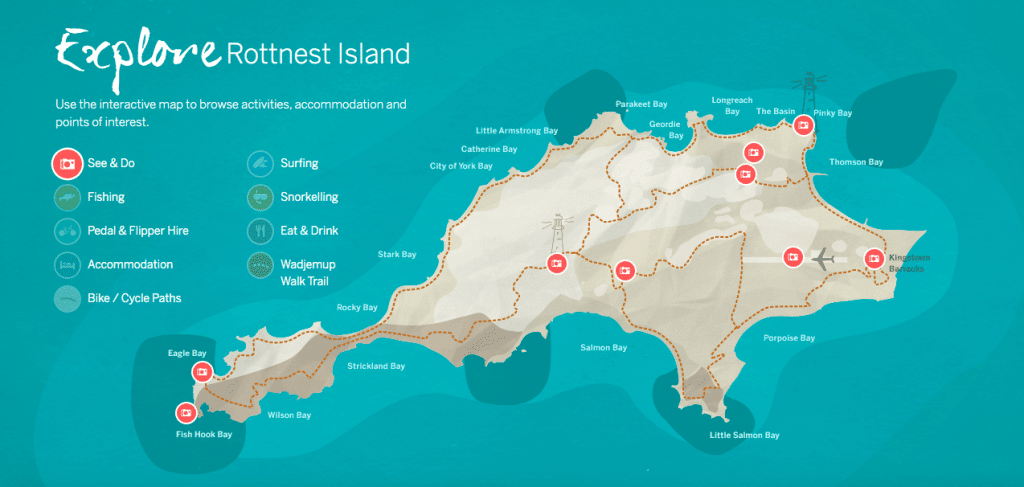
Thomson Bay: you can’t miss it, it’s where the ferry docks and the only village on the island
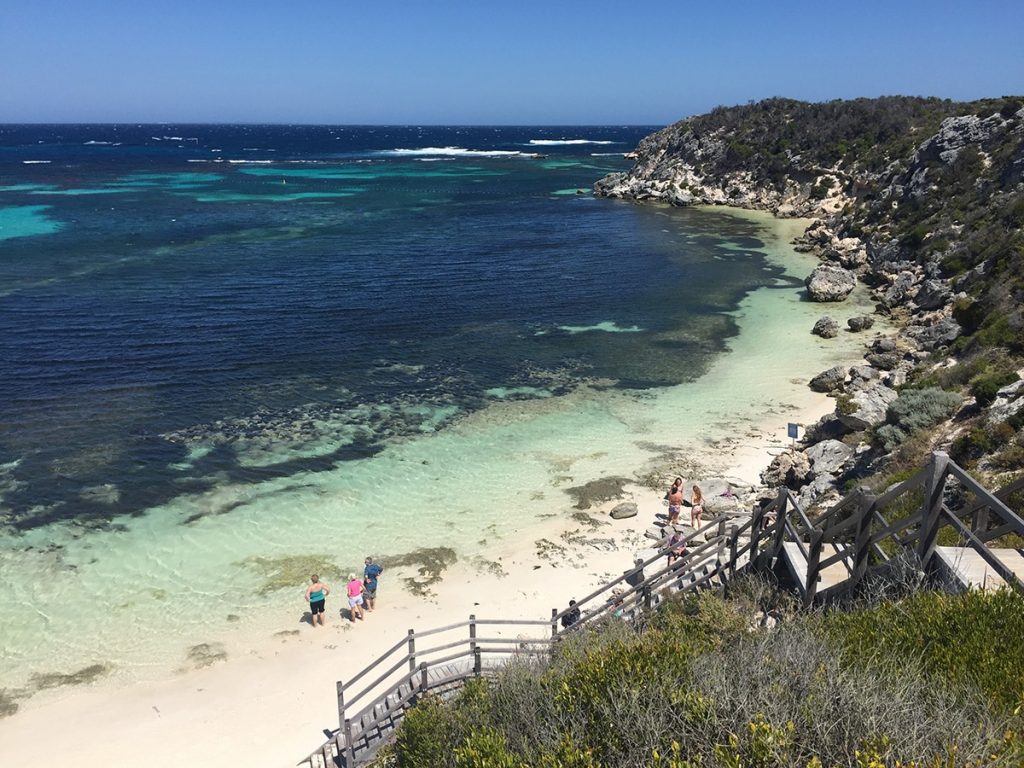
The Basin: for its natural swimming pool, its clear and shallow waters
Little Armstrong Bay: for its incredible deserted beaches
Back on the saddle, head west to Cape Vlamingh, where the rugged coastline marks the western tip of the island. The wildlife here is worth the ride: goannas (large monitor lizards, often mistaken for iguanas — Australia has none), king skinks, ospreys, and New Zealand fur seals hauled out on the rocks below Cathedral Rocks. Dugites, a venomous snake, do live on the island but are shy and rarely seen — stay on the paths and you’ll be fine.
Little Salmon Bay: for snorkeling and seeing one of the most beautiful beaches in Australia
How do you get around the island?
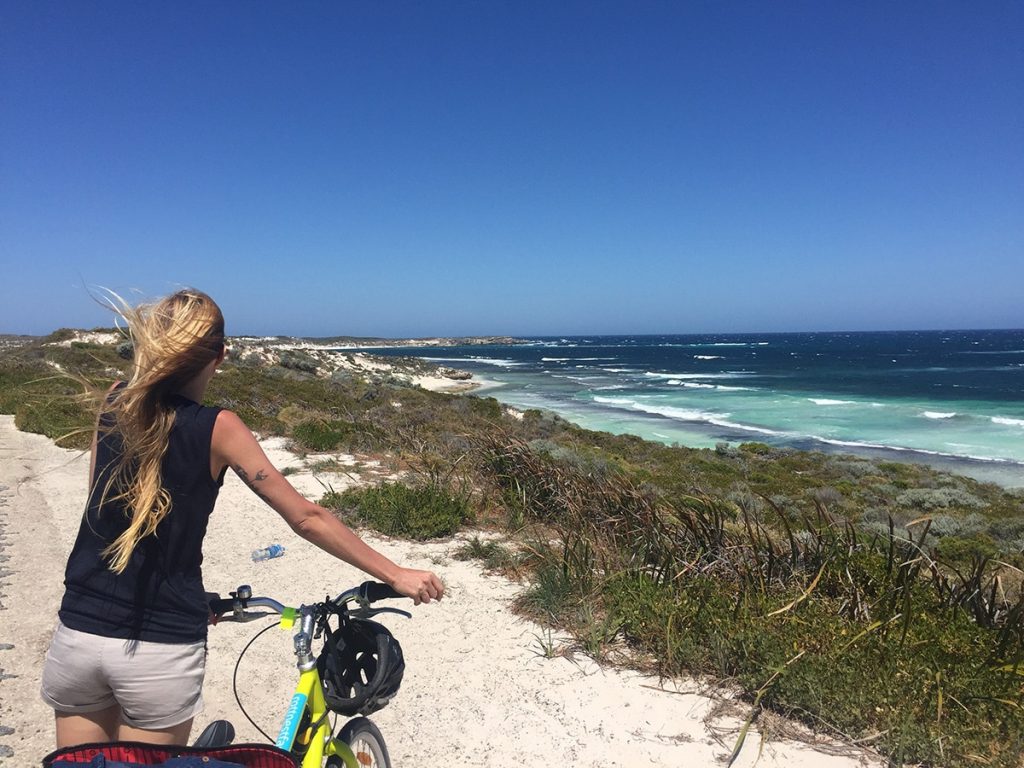
Two means of transport are available to you: bus or bicycle. The Island Explorer bus circles Rottnest, stopping at the most famous beaches. A bicycle will give you more freedom and remains the most popular mode of transport on the island.
The tour of the island by road is 22 kilometres, so cycling is ideal. You’re in for some decent exercise, as the island is pretty hilly! But the landscapes and beaches are stunning, so you’ll quickly forget about how hard you have to pedal to get around.
Island Explorer Bus vs Bike
| Feature | Explorer Bus | Bike |
| Cost | AU$25 day pass | From AU$36 adult, $18 child |
| Frequency | Every 15 min (9 am – 3 pm), every 30 min after 3 pm | N/A |
| Coverage | 19 stops circuit, incl. West End seal colony | All paved roads + inland trails |
| Effort | Minimal (good for hot days) | Moderate; 22 km full loop, some hills |
| Flexibility | Must wait for next bus (can fill in summer) | Stop anywhere, swim whenever |
Also consider the Discovery Bus Tour, which goes around the island in 90 minutes while a guide tells you about the history of the island and its flora and fauna.
Places to explore on Rottnest Island
A first stop at The Basin is a must. It’s a small natural swimming pool and the perfect place to start the day with a bit of snorkelling! After that, continue west to Cape Vlamingh where a rugged landscape marks the end of the western territory. There’s plenty of wildlife to be found here – you’re bound to run into some snakes, iguanas, and other reptiles during your trip!
Back on your saddle, retrace your route for a while, taking the road east and stopping at the gorgeous Little Salmon Bay. With white sand and turquoise water, you won’t be able to resist taking a swim and admiring the fish.
Marine sanctuaries: Fishing banned at Parker Point, Little Salmon, West End. Respect no‑take zones.
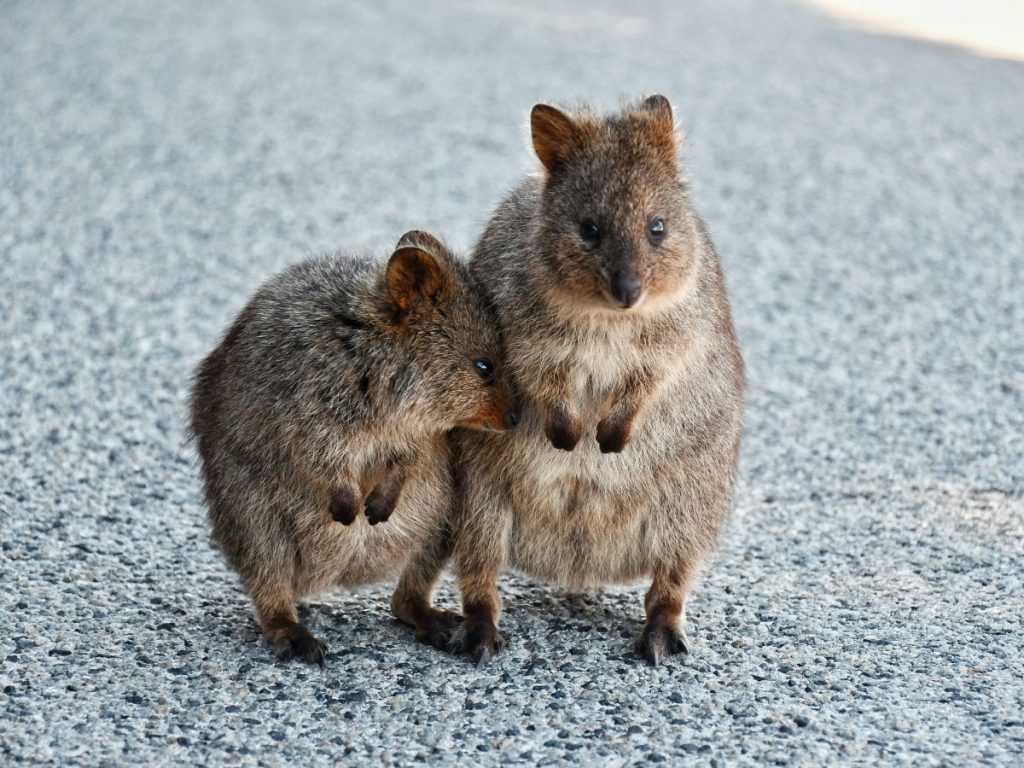
Then take a stroll through the island’s only village and meet the quokkas — the small marsupial that made Rottnest famous. They look like a cross between a kangaroo, a rat and a squirrel, and they are genuinely unbothered by people.
Things to do on Rottnest Island
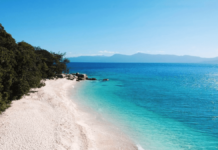
With its 63 beaches and 20 bays, Rottnest Island is the perfect destination for water sports and relaxation.
You can also opt for some more adventurous activities – for example, parachuting over the turquoise waters of Rottnest!
There are also guided walking and Segway tours during which you will learn about the history of the island and the first colonies in Thomson Bay.
Rottnest Island is also the perfect place for whale watching during their annual migration along the coast. Between August and November, the whales return south with their newborns, and spend time in the waters of Rottnest Island. You can observe them from the West End Boardwalk, accessible by bike or with the Island Explorer bus.
And no visit is complete without meeting a quokka. This small marsupial is related to wallabies, and while Rottnest is by far the best place to see one — around 10,000 live here and they’re used to visitors, they aren’t found only here. Smaller populations survive on Bald Island and in the wet forests of south-west Western Australia, though they’re shy and hard to spot there.
Day‑Trip Itinerary (Cycling Version)
| Time | Plan |
| 07:30 | Ferry from Fremantle (30 min) — snag a seat upstairs left‑side for first glimpse of Thomson Bay. |
| 08:15 | Pick up bike & snorkel set at Pedal & Flipper (5 min walk from jetty). |
| 08:45 | Ride to The Basin (quokka hotspot + sheltered swim); continue anticlockwise via Pinky Beach lighthouse boardwalk. |
| 10:00 | Little Salmon Bay snorkel (shallow coral ledges, calmer than Parker Point). |
| 11:30 | Power up West End hill; spot NZ fur seals at Cathedral Rocks viewing platform. |
| 13:00 | Lunch picnic at Geordie Bay bakery (budget), or book Sunsets Rottnest at The Lodge Wadjemup for Cottesloe‑style plates. |
| 14:30 | Optional surf at Strickland Bay or detour inland salt‑lake loop to meet roos + quokkas. |
| 16:30 | Return bikes, grab a soft‑serve at Pelican Kiosk at The Lodge. |
| 17:15 | Golden‑hour quokka selfies on Thomson Bay foreshore — stay low, arm’s‑length, no food. (rottnestisland.com) |
| 19:00 | Return ferry (standard) or keep island vibes rolling with the 9 pm late‑nighter. |
Where to stay on Rottnest Island?
If you want to take full advantage of the island and the heavenly beaches, spend one or more nights here. There are different types of accommodation to suit all budgets, all located on the eastern part of the island.
You can opt for the island campsite, with pitches from $40 per night (without electricity). The campsite offers 43 pitches as well as sanitation facilities, an outdoor kitchen and four barbecues with free access.
You could also decide to spend a night or two at the Rottnest Island Authority, a holiday village that offers dorm beds, villas or small cabins from $101 per night.
The Kingstown Barracks Hostel is also a great option for smaller budgets, with the option to choose from a private family room (sleeps up to four people) to a dorm. From $58 per night.
In the heart of Thomson Bay, the Samphire Rottnest is a stylish hotel with a selection of beachfront rooms from around $368 a night.
In a slightly higher price range, the Discovery Rottnest Island is a great place to stay. You can spend the night there in one of the 83 luxurious eco tents. Prices start at $410 a night and can go up to $850. The time of year also affects the prices.
Finally, for those on a bigger budget, the Karma Rottnest offers large rooms with terraces, and has a restaurant, swimming pool and spa.
How much should you budget?
On the island, there is only one village where you can buy food, water etc. and the prices charged are high. If you plan on-site activities, your budget will inevitably increase. It’s a good idea to bring a packed lunch to keep you going if you’re coming on a day trip.
If you own your own snorkel and mask, bring it with you to save rental costs.
Budget Breakdown (Per Adult, Cheapest Options)
| Item | Cost |
| Ferry (Hillarys Fast Ferries web special) | AU$92 |
| Bike + helmet (Pedal & Flipper) | AU$36 |
| Snorkel set | AU$22 |
| Island Explorer bus (if you skip bike) | AU$25 |
| Bakery lunch + coffee | AU$18 |
| Total (bike version) | AU$148 |