















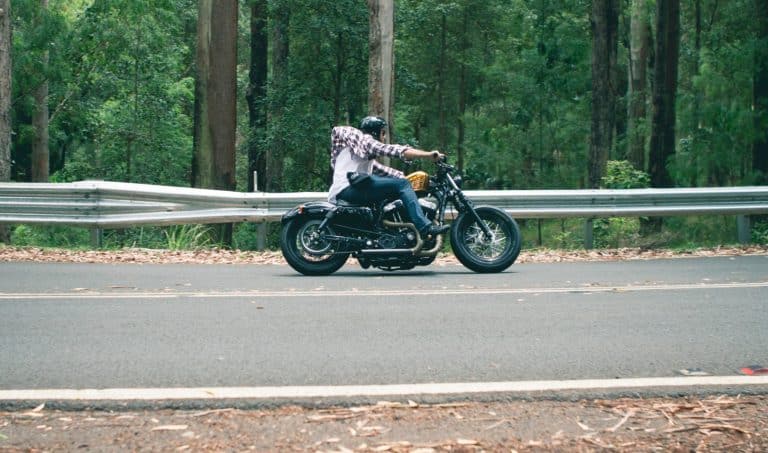
Embarking on a motorcycle ride around Australia is the ultimate adventure for any rider. The vast landscapes, diverse terrain and sheer emptiness make it an unforgettable trip. But crossing a country thirty-one times the size of the United Kingdom on two wheels takes adventure to another level. Riding through deserted expanses, following straight lines that stretch beyond the horizon, and cruising along golden beaches — the journey is the destination here. Quentin did his first Working Holiday Visa in New Zealand before deciding to tour Australia by motorbike.
Table of Contents
Essential Planning & Route Ideas
Choose the Right Harley Davidson
Ensure your Harley is suited for long-distance travel. Models like the Road King, Electra Glide, or Street Glide are excellent choices due to their comfort, durability, and ample storage space.
Licence and insurance: sort this first
Two things will stop your trip before it starts, and neither appears in most motorcycle travel articles.
Your licence. You need a valid motorcycle licence — a car licence won’t do. If yours isn’t in English, you must carry either an International Driving Permit or an official NAATI-certified translation alongside the original. Police do check, and a rental or private sale can fall through without it. Note that your home licence is generally valid for three months in most states before you’re expected to convert it.
🪪 Official NAATI Translation of Your National Driver’s Licence
Getting an accredited translation is the fastest and most reliable way to drive legally in every Australian state. Our NAATI‑certified translators will translate your German, Italian, Spanish, Czech, Russian licence within 24 to 48 hours!
Your insurance. This is where most riders get caught out. Registering a bike in Australia includes CTP (compulsory third party), which covers injury to other people — and nothing else. It does not cover your bike, anyone else’s property, or you.
Check your travel policy before you buy a bike. A great many standard travel insurance policies exclude motorcycles entirely, or cap cover at 125cc — which rules out every bike mentioned in this article. Others void cover if you’re not wearing full protective gear, or if you ride on unsealed roads. Read the exclusions properly: an evacuation from the Nullarbor is a five-figure bill, and the nearest hospital can be 500 km away.
Our guide: choosing travel insurance for a Working Holiday.
Packing & Gear Essentials
- Pack light and minimal — every kilo matters on a bike. Focus on multi-use pieces, waterproofs, and hydration gear.
- Essential gear: helmet, gloves, protective jacket/boots, sleeping kit, basic tools, first-aid, phone charger, water and snacks.
- Invest in quality camping gear, such as a mattress, tent, and sleeping bag. After riding 800 km on a motorcycle, a good night’s sleep can be very useful. Additionally, this equipment can be resold or brought back with you to Europe.
When to Ride Australia
Southern states and Tasmania: October to April, with March–April and October–November the sweet spot. Midsummer is rideable but brutal, 40 °C in full protective gear is genuinely dangerous, and January is peak bushfire season, when roads close at short notice.
The Top End and the tropics: May to September only. The wet season brings flooded roads, closures and heat that make riding miserable at best.
That seasonal split is why most people ride the loop anticlockwise, chasing winter north and summer south.
Route Planning
To embark on a motorcycle tour of Australia, it takes more than just a love for motorcycles and riding for 10 hours a day. You must also be willing to live without too much comfort and have experience riding a motorcycle. Australia is a wild country, with unsealed tracks, animals jumping on the roads, road trains, and other challenges. Any biker will quickly realize that they’ve left their comfort zone. In some isolated areas, help can take 4-5 hours to arrive, so you must be aware of the risks.
The big one: the classic Highway 1 loop circles the entire continent and takes in every mainland capital. At roughly 14,500 km it’s the longest national highway in the world — realistically two to three months of riding if you want to actually see anything along the way.
Australia’s size and diverse geography require careful route planning. Popular routes include:
- The Great Ocean Road: Stretching along the south-eastern coast, it offers stunning coastal views and winding roads.
- The Nullarbor Plain: This vast, treeless plain offers a unique riding experience, but ensure you’re well-prepared for its remote stretches.
- The East Coast: Riding from Sydney to Cairns provides a mix of coastal beauty and vibrant cities.
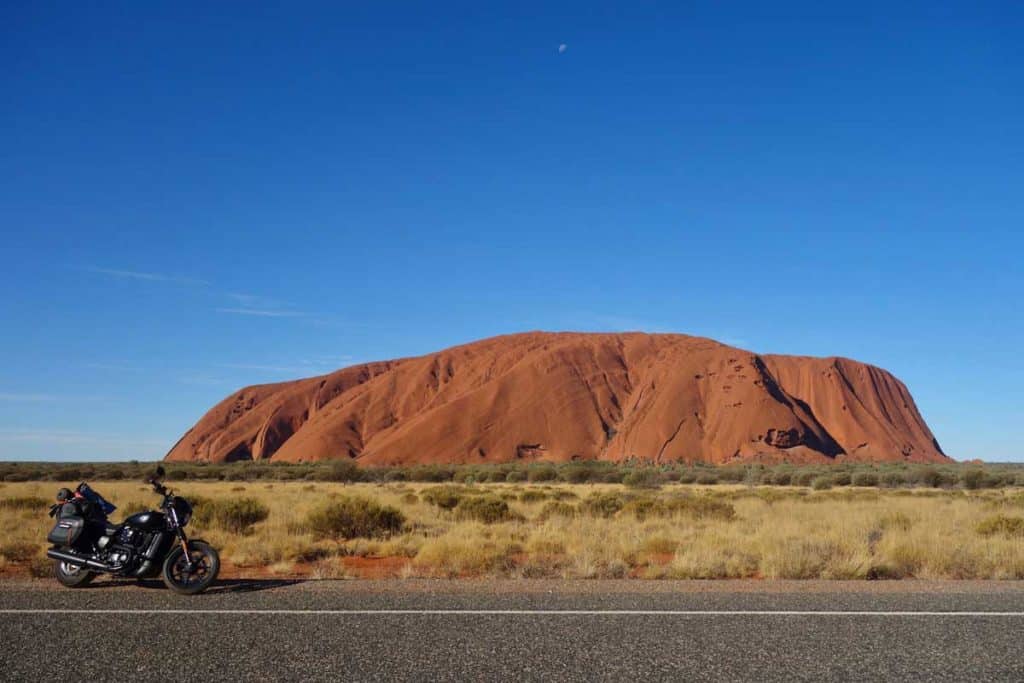
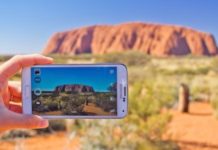
- The Outback: Exploring the Red Centre, including Uluru and Alice Springs, gives a taste of Australia’s rugged interior.
On the Road
Road & Safety Considerations
Always wear protective gear and ensure your motorcycle is well-maintained. Regularly check tire pressure, oil levels, and brakes. Carry spare parts and tools for minor repairs.
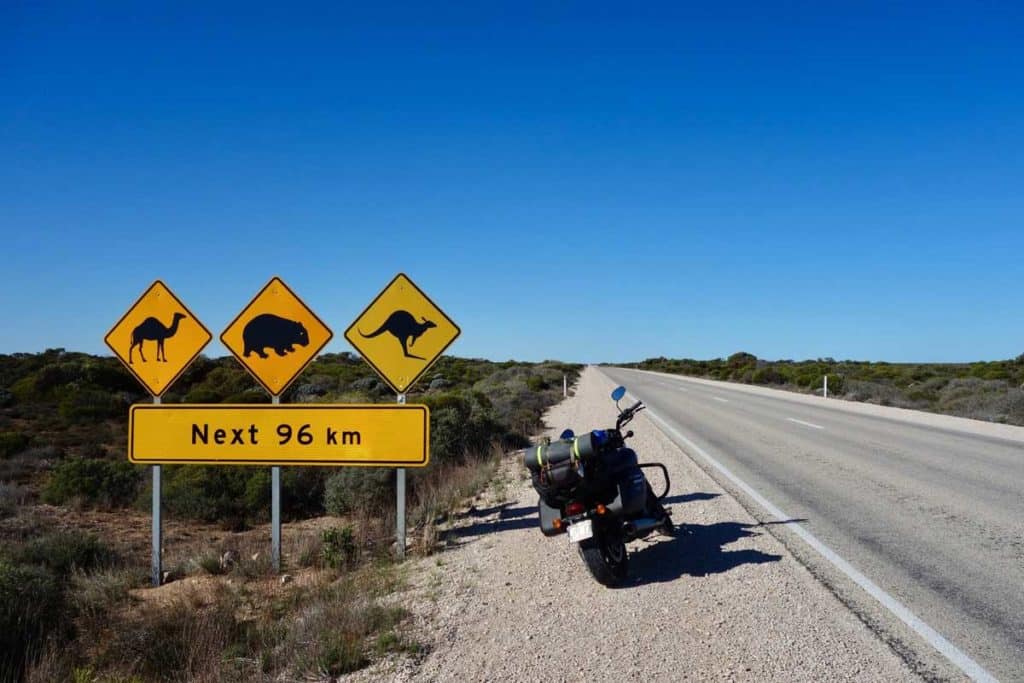
Avoid riding at dawn, dusk and at night. This is the single most important rule on a bike here. Kangaroos are most active in exactly those hours, and a collision that dents a car will kill you on two wheels. Plan to be off the road by late afternoon, it also means you arrive somewhere while there’s still light to set up camp.
Road trains are the thing to respect out here. These are trucks hauling multiple trailers, up to 53.5 metres in the Northern Territory, so roughly four articulated lorries end to end. They need well over a kilometre to stop, they throw up a wall of dust and gravel, and the turbulence as one passes will move you across the lane. Slow down, pull well left, and if you’re overtaking, be certain: you need a very long clear stretch. On unsealed roads, the safest move is simply to stop and let them go.
Navigation
Use a reliable GPS or map. Mobile phone coverage can be spotty in remote areas, so have physical maps as a backup. Inform someone about your route and expected arrival times.
Fuel and Supplies
Fuel stations can be far apart, especially in remote areas. Fill up whenever possible and carry extra fuel. Stock up on water and snacks to stay hydrated and energized.
Respect wildlife and environment
Australia’s roads are home to diverse wildlife. Be cautious, especially at dawn and dusk when animals are most active. Adhere to speed limits and road signs to ensure safety.
Enjoy the journey
Take time to appreciate the stunning landscapes, local culture, and hidden gems along the way. Stop at scenic lookouts, local cafes, and roadside attractions to make the most of your adventure.
A few tips while riding around Australia
In Australia, the roads are generally well-maintained. But it’s important to be prepared for various road conditions, especially if you venture off the main roads. Here are some tips to keep in mind while on the road:
- Drive on the left-hand side of the road in Australia.
- Observe the speed limits. The maximum speed limit on highways is typically 110km/h, although it can vary in certain areas. In built-up areas, the speed limit is usually 50 km/h.
Highways in Australia are typically toll-free. Except around major cities like Sydney, Brisbane and Melbourne where electronic tolling is in place. It’s important to pay the toll online, as there are no payment counters on the road sections.
A realistic itinerary
Be honest with yourself about distance. The full lap is a two-to-three-month commitment. If you have three or four weeks, pick one leg and ride it properly rather than sprinting across the continent.
Three to four weeks: the southern loop
- Melbourne → Adelaide via the Great Ocean Road and the Flinders Ranges — around 1,000 km, and some of the best riding in the country
- Adelaide → Flinders Ranges and back, or push north to Coober Pedy
- Return along the Murray or through the Victorian High Country and the Great Alpine Road
Six to eight weeks: the centre and the top
- Adelaide → Alice Springs on the Stuart Highway, via Coober Pedy — 1,500 km of straight line
- Alice Springs → Uluru and back, then north to Katherine and Kakadu
- Katherine → Cairns along the Savannah Way — note that long sections are unsealed and not suitable for a road bike
- Cairns → Brisbane down the coast
The full lap: two to three months
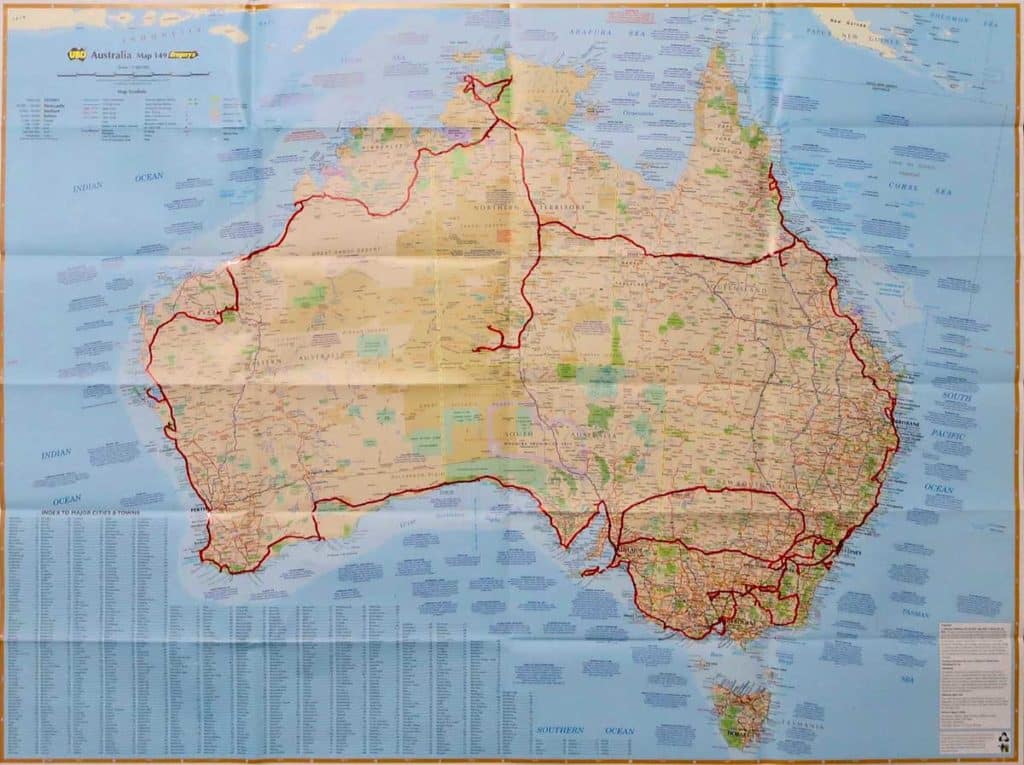
Highway 1 the whole way round, or the classic anticlockwise route: Sydney → Melbourne → Adelaide → Nullarbor → Perth → up the Coral Coast → Broome → Darwin → Cairns → back down the east coast.
Two routes to think twice about. The Savannah Way and Cape York are frequently suggested in motorcycle articles, but both involve long unsealed sections, river crossings and fine bulldust that hides potholes. On a loaded touring bike, alone, they range from unpleasant to genuinely dangerous — and Cape York is only passable in the dry season. Leave them for an adventure bike and a riding partner.
For side loops and scenic detours, the Hema Australia Motorcycle Atlas is the reference Quentin used and still the best paper resource out there.
Quentin’s experience on a Harley Davidson
“During my time in Australia, I worked in NSW and VIC during the spring and summer months, which allowed me to explore the Great Alpine Road, the Great Ocean Road and other scenic routes in the area on my days off. After that, I headed towards WA along the coast and then went up to Darwin in the winter before finally reaching Alice Springs. In the end, I returned to Cairns and then to Sydney to sell my bike in the early spring, which is the ideal time to sell as it is easier to find buyers.
Being on a Working Holiday Visa was a great compromise as it allowed me to travel for 2 or 3 weeks at a time and then work for a month before continuing my travels. Working in various areas of Australia allowed me to discover the different cultures and lifestyles. Locals were always eager to share advice on less touristy places to visit, which was a great way to explore the hidden gems of Australia.
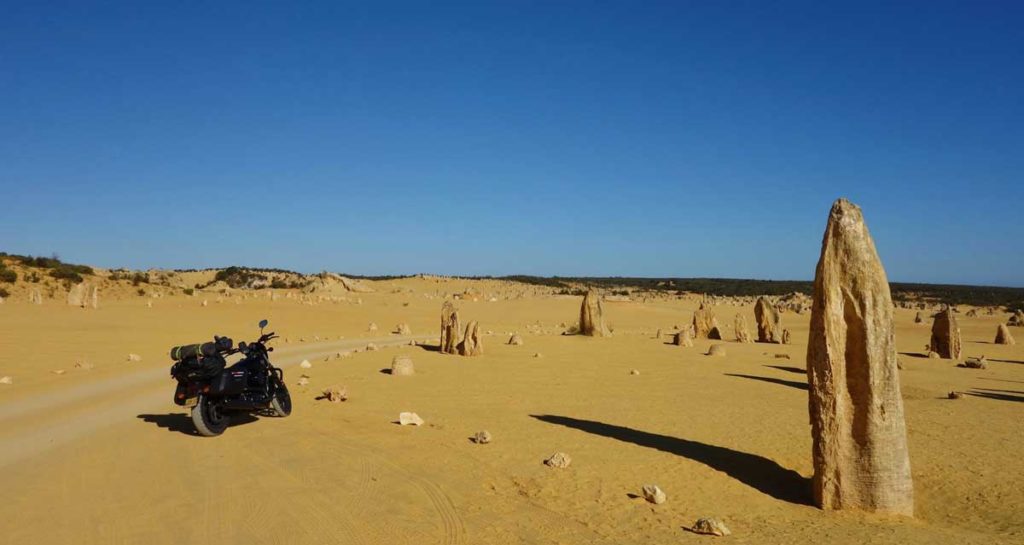
Touring Australia on a motorcycle: A project that had been in my head for a long time
Since I started traveling, I became immediately hooked on the idea of traveling by motorcycle. The feeling of freedom that comes with it is incomparable. Going around Australia had always been a tempting idea, but I was hesitant at first because it is such a big project. However, I eventually realized that it was now or never and decided to go for it. After all, we often regret the things we never try!
Getting ready – How did you prepare for this experience?
To prepare for my motorcycle trip in Australia, I made sure to have prior experience riding motorcycles. After that, I scoured forums for advice and tips from other riders who had been to Australia. I also reached out to people who had ridden there before to gain a better understanding of what to expect. Additionally, I invested in a biker Atlas, which I highly recommend to any rider in Australia. The Atlas provided a list of the top 200 trips to take in the country. It was an invaluable resource during my trip (Australia Motorcycle Atlas with 200 top rides – Hema maps)
Living conditions on the road
On the mechanical side, I was fortunate to have had almost no issues, except for a puncture at the start. I made the decision to purchase a 2017 motorcycle with only 3000 km on the clock. This reduced the likelihood of mechanical problems compared to an older bike. It’s important to maintain your motorcycle regularly, which includes oil changes, air filter replacements, and other necessary upkeep.
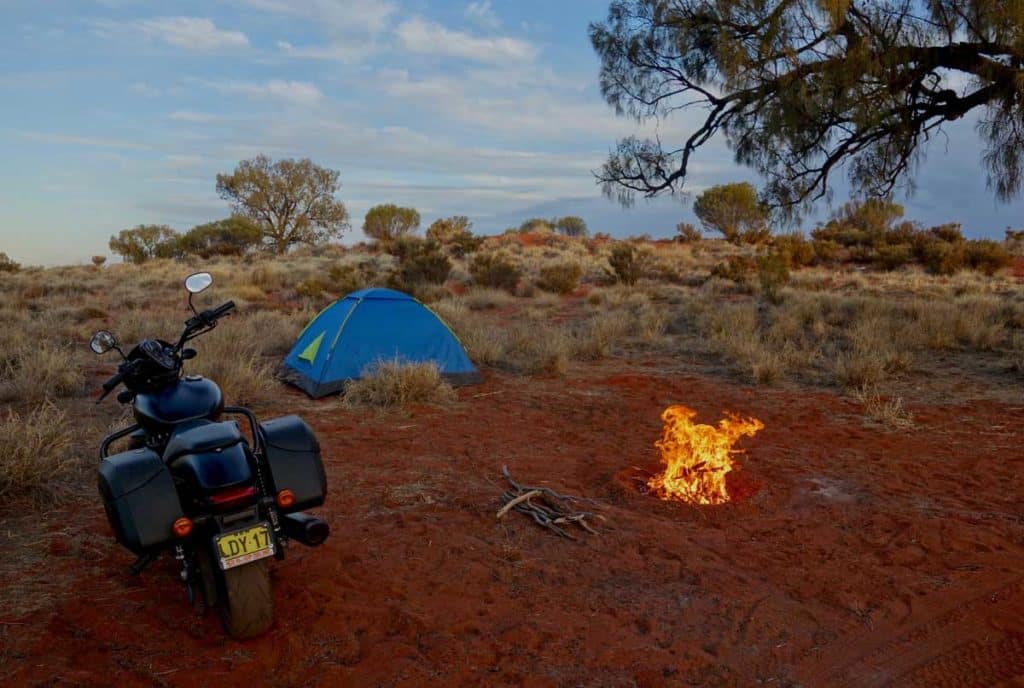
When it came to accommodations, I primarily used a tent. Except when I was able to find an affordable hostel or backpacker lodge. I recommend investing in a good quality tent that is lightweight, easy to set up, and provides adequate protection from the elements.
In terms of packing, there are a few essential items you’ll need for your motorcycle trip, such as oil, coolant, and a lock. If you plan on traveling through the Outback, you’ll also need a 5-liter can of gasoline, and a minimum of 5 liters of water, as drinkable water may be scarce or expensive in certain areas. For food, I packed canned goods, fresh fruit, and cereal bars. You may also consider bringing a portable gas cooker for more comfortable cooking, but be aware that it will take up additional space and require more water for cooking and cleaning.
When it comes to camping gear, a good quality tent, sleeping bag, and inflatable pillow are essential. You’ll want to travel light, so make sure to choose lightweight and compact equipment. Keep in mind that comfort may be limited, but the freedom of the open road and the stunning scenery of Australia more than make up for it.
My favourite region
Australia offers a vast array of breathtaking landscapes that are worth exploring on a motorcycle. Although the Outback may seem monotonous, it’s an experience you won’t find anywhere else. Imagine being alone in the middle of nowhere, with no hills or mountains in sight, and having a roadhouse every 200 kilometers. It’s a unique feeling that is hard to describe. The Great Alpine Road in Victoria offers stunning views of snow-capped mountains and lush greenery. Riding through the winding roads of Cape Tribulation in Queensland is an unforgettable experience. And who could forget the enchanting feeling of riding around Uluru – Ayers Rock on a motorcycle? Finally, I can’t miss mentioning the thrill of riding on the pristine beaches of Lucky Bay in Western Australia. All in all, there is something special to be found in every corner of Australia, making it the perfect destination for motorcycle enthusiasts.
Why did I chose this motorcycle model?
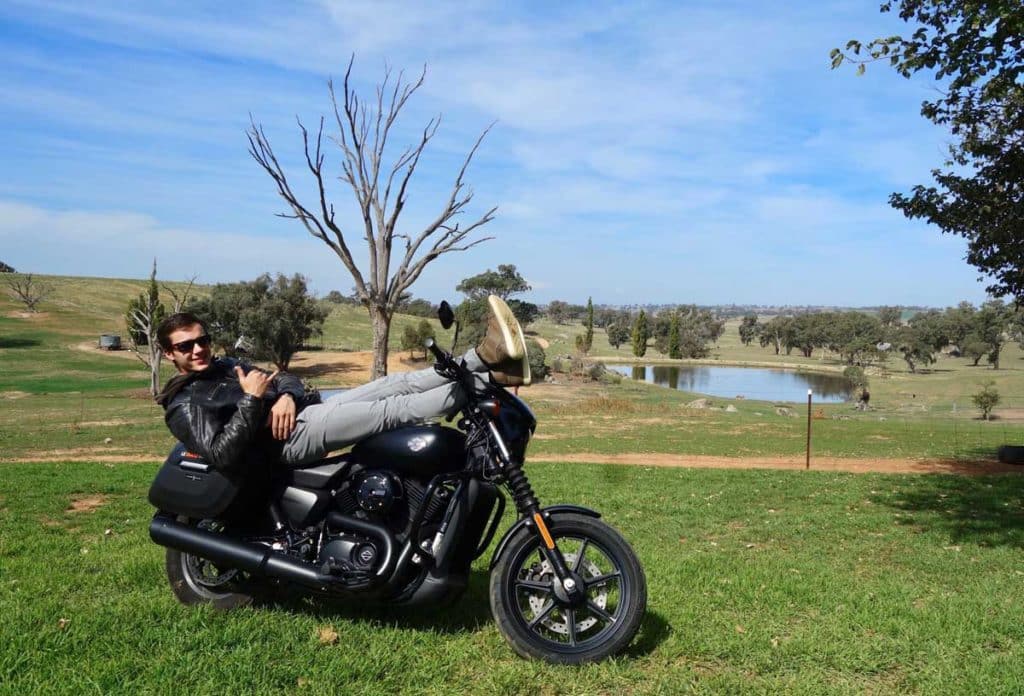
When I was planning my trip to Australia, I initially considered getting a trail bike since many parts of the country are known for their off-road terrain. However, after researching more, I realized that there are plenty of long, straight stretches of tarmac where a more comfortable custom-type motorcycle would be better suited. Especially when covering distances of up to 800km in a day. Of course, a trail bike would be more practical on gravel and dirt roads, but traveling alone in remote areas can be dangerous. It’s also recommended to carry a satellite beacon in case of emergencies.
As for choosing a Harley-Davidson, the prices in Australia were much more affordable compared to Europe. Making it a good opportunity for me to take the trip around the country on one. Back home, I ride a Kawa (kz650 from 1980), but I wanted to try something different for this adventure.







Thanks Mate
I too am planning to ride a lap of Australia in September..no matter what the conditions are..I am 70yrs old and finding the right bike took some doing, on a pension..The lap is mainly sealed road, so even though a CB500x would be the go, the price was beyond me..I am flying in from Siam to see family in Perth. I am also planning a world trip Bangkok to Vladivostok and across to Iran and then back down thru India and Myanmar ..So I thought I would practise on a lap of Australia,, I have settled on a used Honda 1100cc as it has the cruise look of it, rather than the cafe racer look and feel,,and finding a cheap trail bike within a month was just not there..I have a CB1300 so know abit about big road bikes..though I have been riding for over 50yrs and owned everything from a 50cc scooter to a Harley. Thanks for the tips..Always good to hear other stories and routes..take care on the road Mate.. Never know might pass you in mongolia or somewhere..