
















Visit Bali on a Budget – Guide for Backpackers
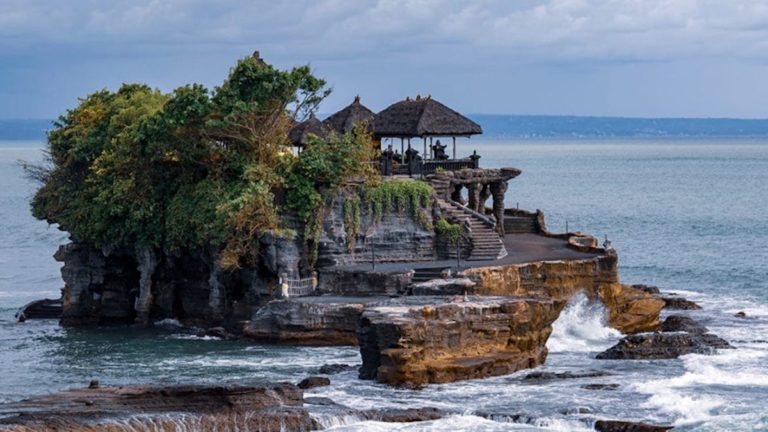
Bali, “the island of the gods” offers everything your heart desires. Everyone is happy and content here, no matter if you’re a surfer, scuba diver, explorer, culture lover or a sun worshipper. This versatility has led to a steep rise in tourism and prices over the past decade. But don’t worry, you can experience Bali on a budget as well!
Table of Contents
Bali, what you need to know before going
Vaccinations
There are no compulsory vaccinations before travelling to Bali. However, as in many other countries, it is strongly recommended that your vaccination list is up to date against these diseases: diphtheria, tetanus, polio, hepatitis A and hepatitis B, whooping cough and measles (for children).
Visa
Most visitors, Australians included, can get a Visa on Arrival (VoA) for IDR 500,000 (about A$48), valid 30 days and extendable once for another 30. Pay on arrival at the airport, or buy it in advance online as an e-VoA. On top of that, everyone pays the one-off Bali tourist levy of IDR 150,000 (about A$14), in place since February 2024 — pay it online through the official Love Bali site or app before you fly to skip the airport queue.
Planning to stay longer and work remotely? Indonesia’s Remote Worker Visa (E33G) lets you live there for about a year (renewable), but you must show income of roughly US$60,000 a year — so it’s not a budget-backpacker option.
Currency
The currency in Bali is the Indonesian rupiah (Rp / IDR). As a rough guide, 1 AUD is worth around 10,000–11,000 IDR (2026), so prices with lots of zeros look scarier than they are — a 50,000-rupiah meal is only about A$5. Carry cash for warungs and small shops, and withdraw larger amounts at once, as ATMs charge a fee per withdrawal.
What is the best season to travel to Bali?
Bali has two climates, the dry season from April to October and the rainy season from November to March. The monsoon is bearable: it isn’t raining all day and you sometimes even see the sun. If you want to save money, it is best to travel to Bali at the end or at the beginning of the rainy season. During that time, prices are lower and there are fewer tourists in Bali.
We don’t recommend the months of December/ January and July/ August, when either European or Australian crowds escape the winter or are on summer holidays. The best travelling period is from April to June or September to November.
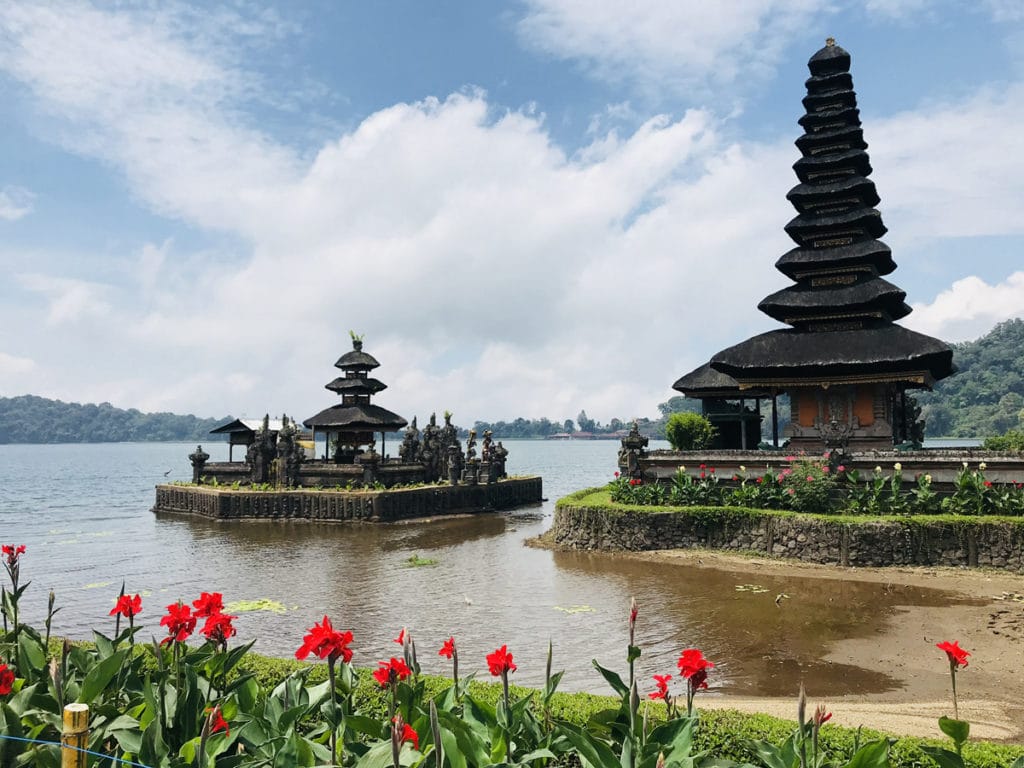
Cheap Accommodation in Bali
If you don’t want to spend too much money, forget about the dream hotels with infinity pool and jungle views on Instagram. But you can find beautiful accommodations at reasonable prices as well!
To save money, book only the first night in advance. It’s best to negotiate the price for the following nights on the spot: Then you might get a 10% discount! If you travel by yourself, hostels are your best bet. In Ubud or Canggu, you pay about 15AUD for a dorm with breakfast. You can also book a room in an authentic homestead for about 30AUD. For breakfast, you get banana pancakes, what more do you need? And if you’re still ogling on the chic hotel pool next door, just order a cocktail over there and you can spend the afternoon by that pool. Luxury for a bargain price!
Food in Bali
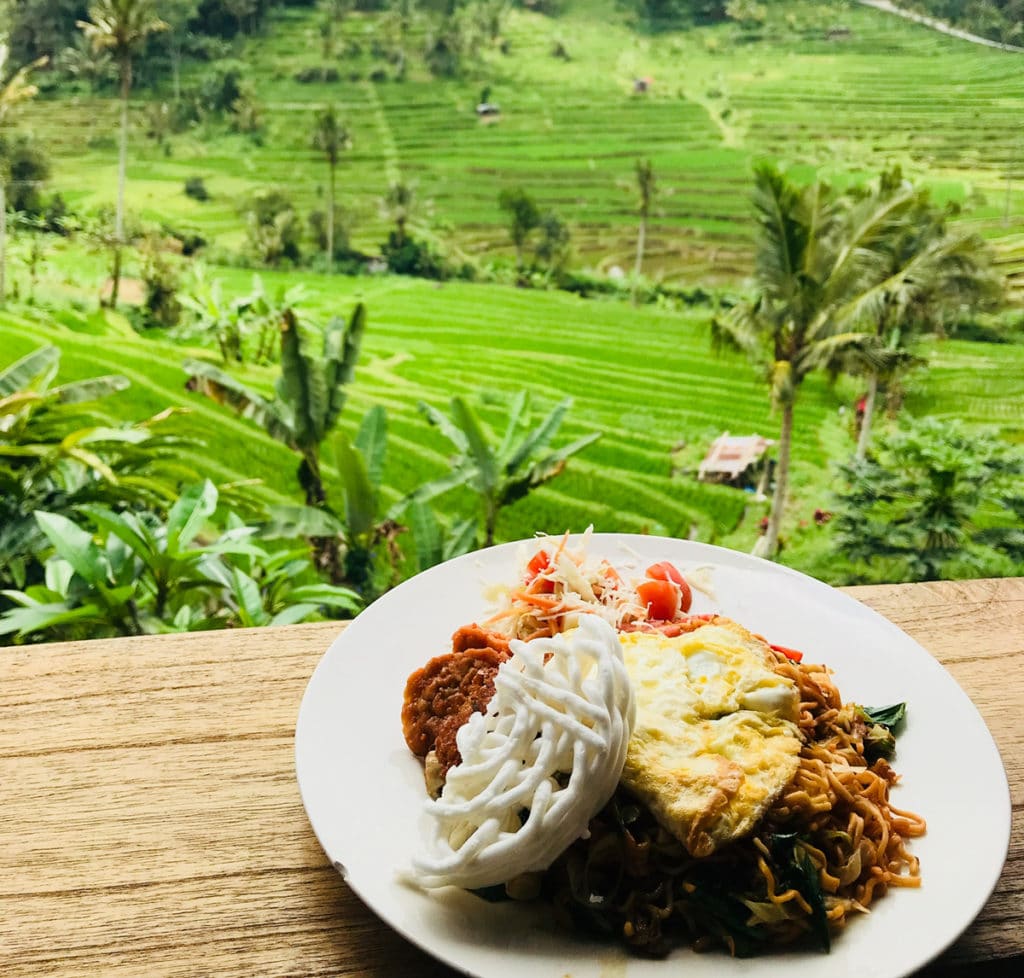
Isn’t it great to eat at restaurants twice a day when travelling in Asia. Go to a Warung instead of a restaurant. You pay less than $4 for nasi goreng (fried rice), mie goreng (pasta and vegetables) or gado-gado (vegetable and peanut sauce). In most restaurants, the Balinese cuisine is delicious and not too spicy. If you really don’t like the local cuisine, note that pasta dishes and pizzas in tourist restaurants are about three times more expensive. In addition, alcohol is also more expensive compared to other Southeast Asian countries.
Getting around
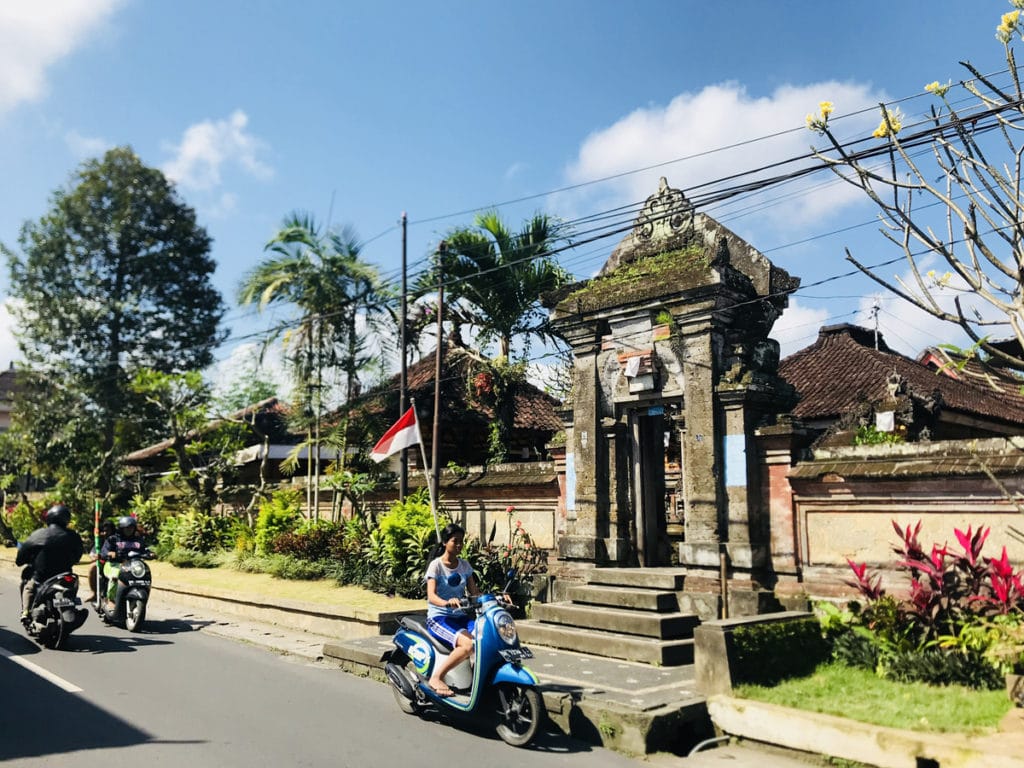
Getting around is cheap if you plan ahead. Local Bemo/Kura-Kura buses cost under A$5. A shuttle from Denpasar to Ubud runs around A$33, and longer hops like Ubud–Amed or Amed–Munduk around A$50. A fast boat to the islands (Nusa Penida, Lembongan, the Gilis) is roughly A$20–35 return. The cheapest freedom is a scooter at about A$6–8 per day — but only ride one if you’re licensed, insured and confident, as accidents are the number-one cause of traveller injuries in Bali.
However, the most common mode of transport remains by private car of a local driver. Often locals approach you on the street, offering you to take you on a day trip or to the next destination. This is the most comfortable way: a private car picks you up at your accommodation and takes you back at the time you like. Denpasar – Ubud costs about 20 € and for Ubud – Amed or Amed – Munduk 30 €.
To get to the islands, you can take a speedboat (about $20 for a return Sanur – Nusa Lembongan) or local boats. Keep in mind, however, that the latter are not known for their safety.
Once there, it’s time for a scooter! Never forget your helmet, otherwise you run the risk of returning you’re your trip with a “Bali Tattoo”. That’s what the locals call the scars of tourists. You can rent a scooter in your hotel for $5 per day.
Powered by GetYourGuide
Things to do in Bali
The best way to see Bali without spending a lot is to enjoy the beauty of nature. Entry fees are low: most temples and waterfalls cost just a few Australian dollars, up to around A$10 for the most popular sites. A traditional Balinese dance show in Ubud is about A$8–10, a surfboard rental around A$15, and a snorkelling trip from about A$8.
Bali is internationally known for its surf spots. If you’re a beginner, book surf lessons in Kuta, the perfect place to learn. Canggu and Uluwatu are very popular among among advanced surfers, where you can rent a board for ten euros.
Amed, with its multi-coloured coral reefs and shipwrecks, is the best place for a dive on a budget.
To buy souvenirs, it’s best to head to the huge market of Ubud (see below), where you find carved wooden statues and colourful sarongs. In Bali, you get the best prices … providing you negotiate! Start with a third of the price, but don’t negotiate for a few cents. What is very important in Asia is to always smile!

Sample budgets (7 days, per person)
Per person, 7 days, flights included — indicative figures to compare travel styles, not fixed prices.
Itinerary “Bali in 2 weeks”
Avoid the expensive and touristy Kuta and Seminyak. The neighbouring town of Canggu is much more authentic and cheaper and highly recommended if you are in Bali on a budget. Then visit Ubud, the cultural and spiritual capital of Bali. 4 or 5 days are not enough to see all the temples, rice fields, and the waterfalls in the area. Don’t miss a Balinese dance show!
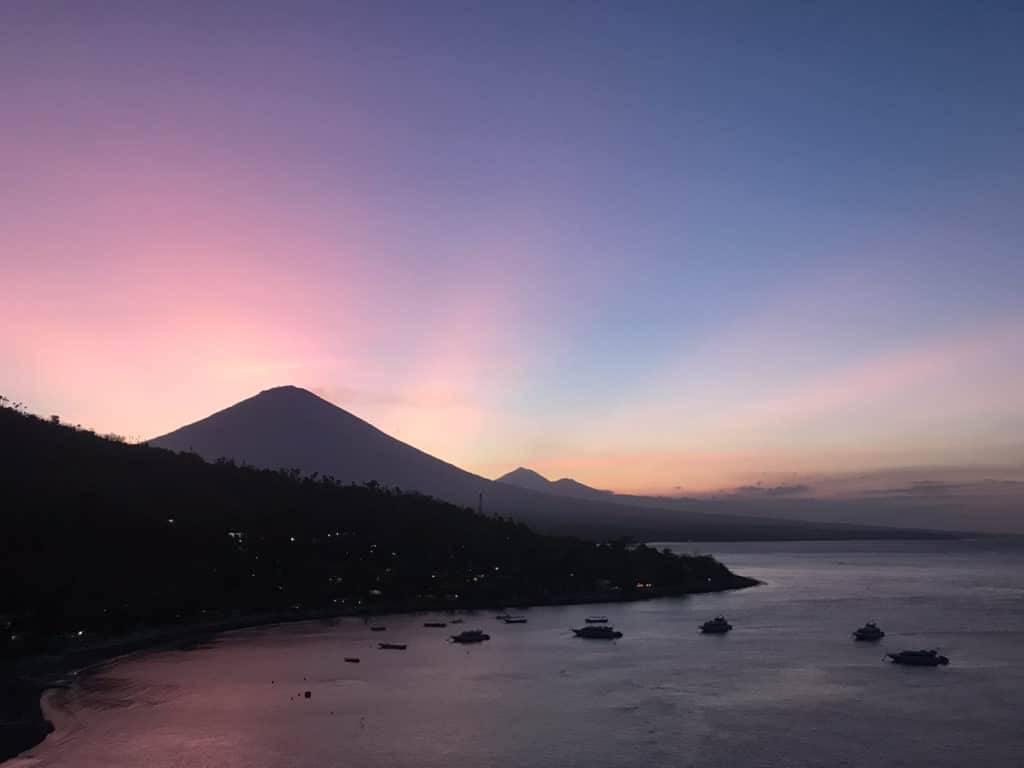
Amed, a small fishing village northeast of Ubud, is a secluded paradise. On the agenda are scuba-diving in incredibly beautiful reefs and riding scooters through the beautiful rice fields. In the beach restaurants you can enjoy seafood and see the Agung volcano. This is one of our favourite places in Bali.
Then on to Munduk, a small village in the mountains of North Bali. Few tourists visit this traditional region of forests and lakes. The wonderful memories of children running after your scooter, the impressions of life in these villages and the farmers along the road smiling at you will stay in your heart forever.
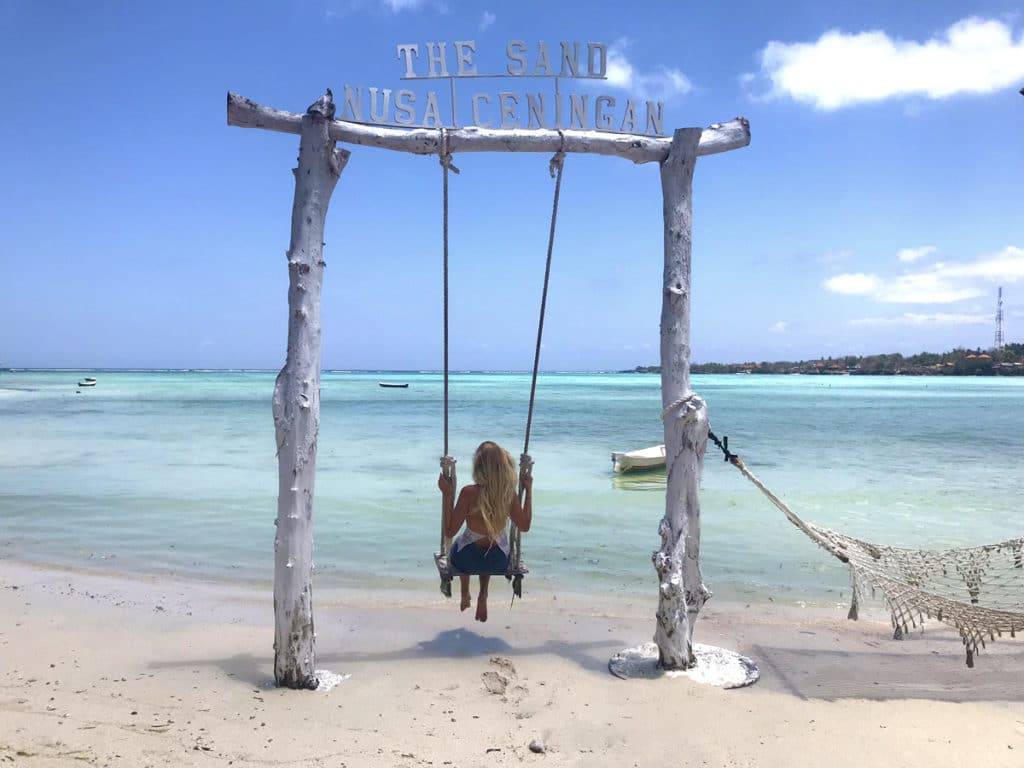
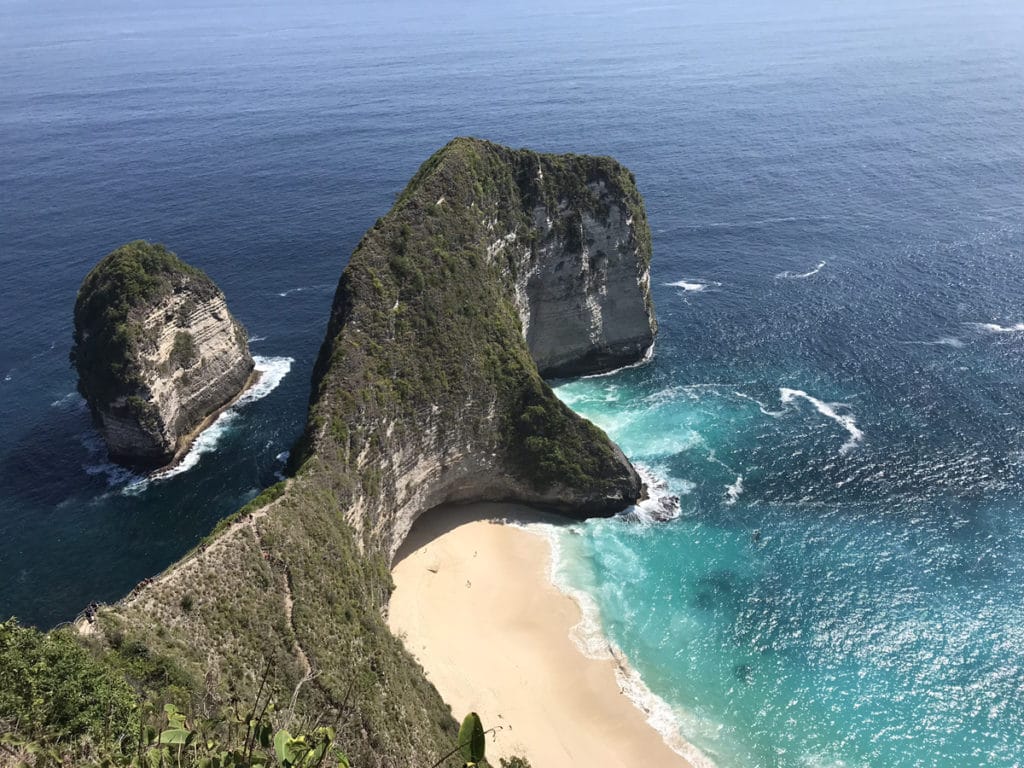
Then it’s time to see the islands! Less developed than the Gilis, Nusa Penida, Nusa Lembongan and Nusa Ceningan are awaiting you. People say that these islands have the same atmosphere that Bali had 25 years ago. Be enchanted by the breathtaking cliffs and turquoise waters before you say goodbye to Bali.
Ubud: Best things to do
Ubud Market
Hundreds of colourful stalls stretch across several lanes and over three floors, where you can find jewellery, clothing and souvenirs at the best prices in Bali. They sell traditional things like hand-painted wooden statues, paintings and sarongs, most of which are made in Ubud. Go to the Gianyar Night Market if you want to go shopping with less tourists and taste good street food.
Traditional art
There are several Balinese art museums and beautiful gardens that you should definitely visit. However, we recommend being accompanied by a guide who can explain the artworks. In the evening, visit Ubud Palace, a Balinese dance show that will enrich you with beautiful memories and photos. Young women in colourful traditional dresses and lots of make-up roll their eyes and make strange movements with their hands! The experience costs only 5 € and the Balinese people like to share their traditions.
Monkey Forest
If you’re a fan of the movie “Planet of the Apes”, don’t miss a visit to the Sacred Monkey Forest! Hundreds of semi-wild monkeys live in this small forest right in the centre of Ubud. But don’t get too distracted by the macaque families, and watch your belongings: These little thieves grab anything that is not nailed down (glasses etc.).
Rice fields
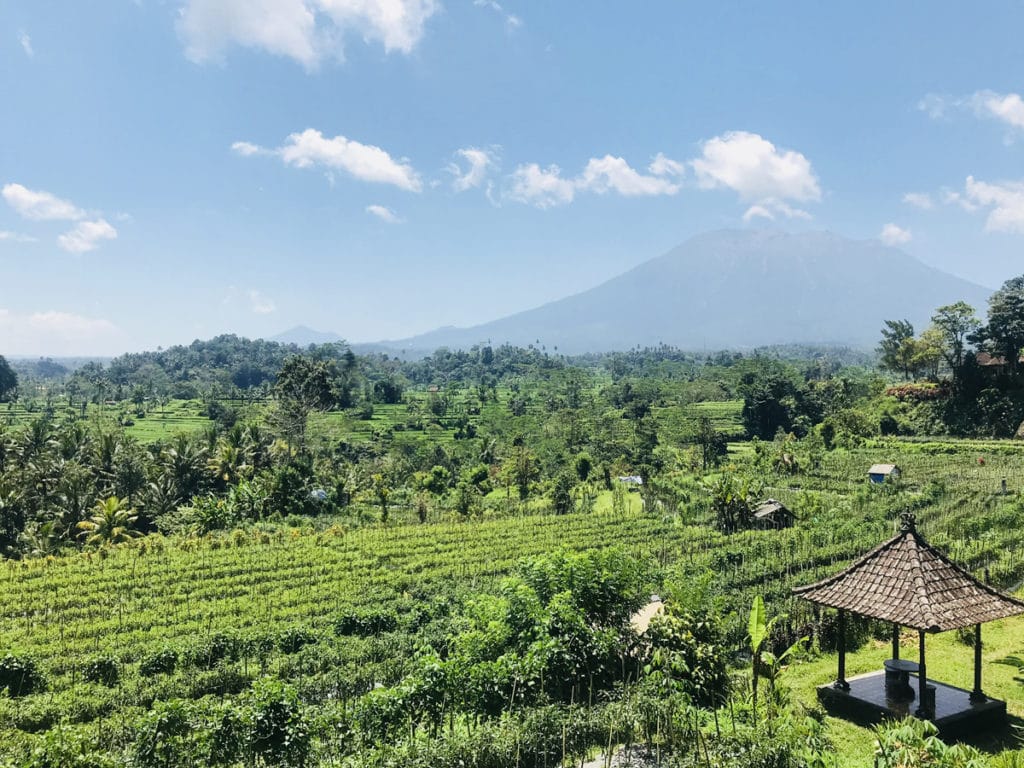
After two days in the city, it’s time to explore the famous rice fields of Bali. Walk to Café Pomegranate for a sunset dinner overlooking the rice fields … right in the centre of Ubud! A magical sanctuary from the crowds and the noise of the city, just minutes away from the market. This is our favourite spot in Ubud, accessible both by scooter and on foot. We recommend you to stay in this area. There you can also make use of your hiking boots and do the “Campuhan-Ridge Walk” early in the morning or at the end of the day. This trail overlooks the rice fields and offers great views of the jungle, in which Ubud is located.
Temples in Ubud
Put on a sarong and immerse yourself in the history of Bali in the temples of Ubud. Discover the Goha Gaja Cave and help prepare for the ceremonies organized by Balinese people. For weeks, they weave baskets, prepare offerings, and pray. This is an opportunity to get to know the local religion and the customs of the Balinese society. In Gunung Kawi, admire the huge statues carved into the rocks, stroll through ancient temples, and enjoy a meal overlooking the jungle and volcano.
Then you’re heading for the famous water temple Tirta Empul, where you can attend a traditional washing ceremony. Ponds full of colourful carp, temples with thatched roofs and meditating monks alongside crowds of tourists taking photos. A perfect representation of today’s Bali, which is seeking a balance between the protection of this beautiful island and its traditions on the one hand and the revenue of tourism on the other.










[…] Bali trip is not complete without an inland tour. Ubud, embedded in rice fields, is the spiritual, cultural, […]